
For the first time in a long time, tiny cars are back in the national conversation.
After a recent trip to Japan, President Trump publicly praised kei cars — describing them as “cute” and “beautiful” — and announced that he has now authorized Transportation Secretary Sean Duffy to “immediately approve” the production of these types of vehicles for the U.S. market. His idea is simple: smaller cars could give Americans cheaper options in the face of rising vehicle costs.
The President also emphasized that these micro machines should be built in America rather than imported from Japan. Stellantis quickly responded by promoting the all-electric Fiat Topolino — technically a quadricycle, not a full car — as a possible proof of concept for ultra-compact mobility.
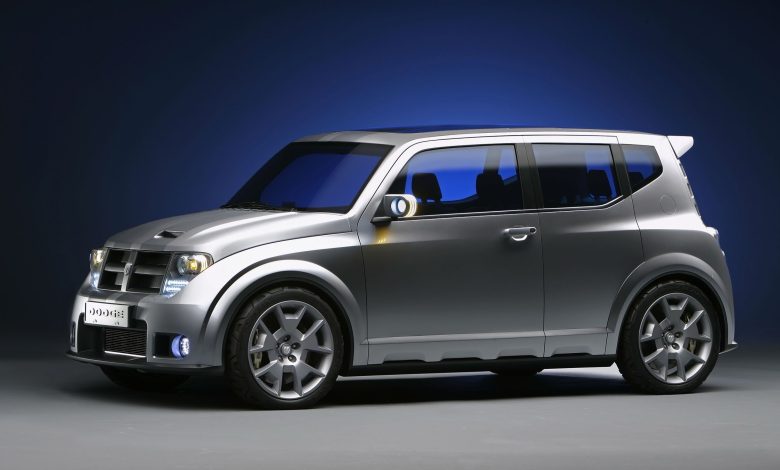
But before we think this is a brand-new idea, Dodge actually came surprisingly close to entering the small-car game nearly 20 years ago — with a concept that was a little bit larger than a kei car, but still very much a small B-segment SUV with a big chip on its shoulder:
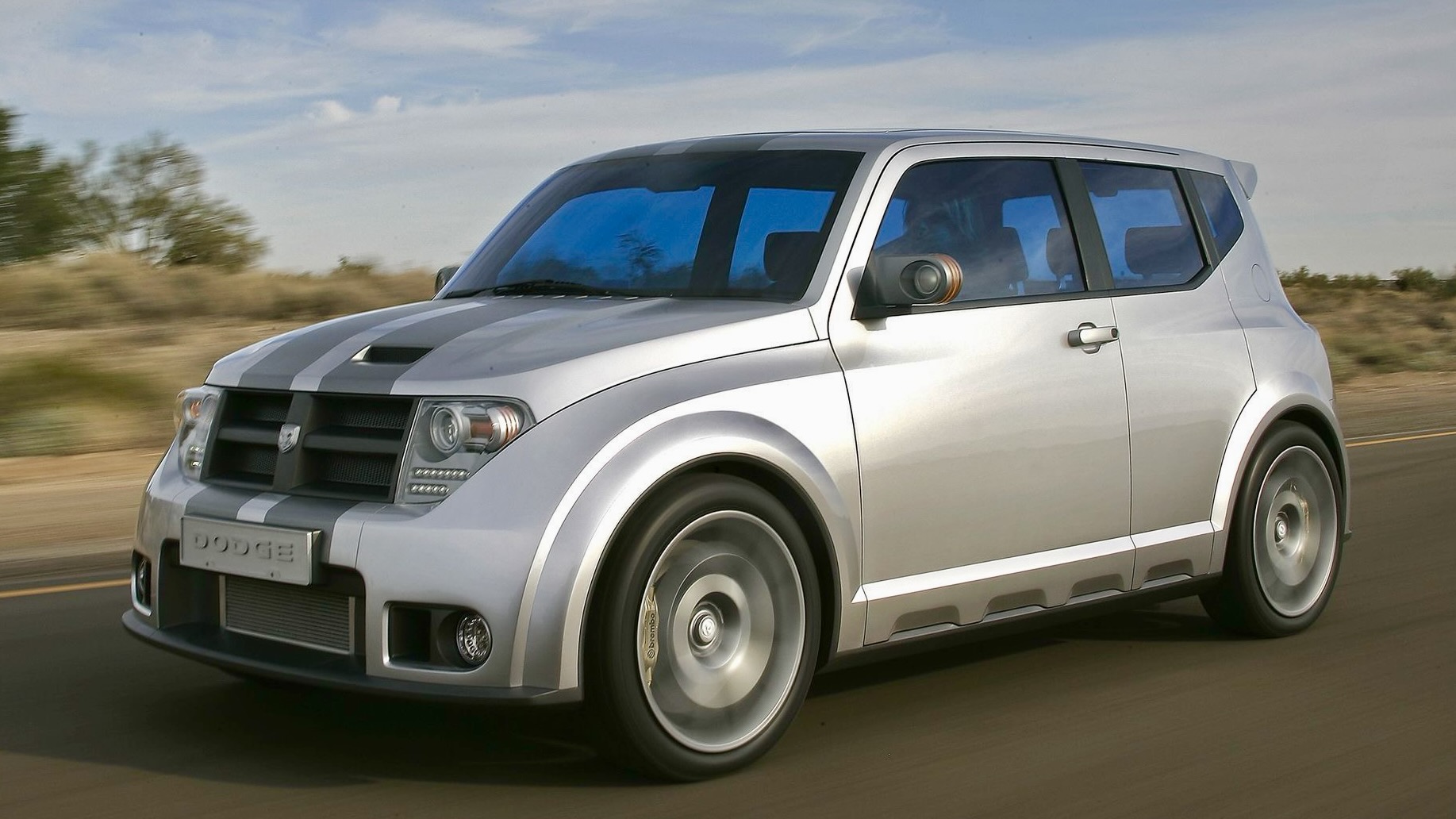
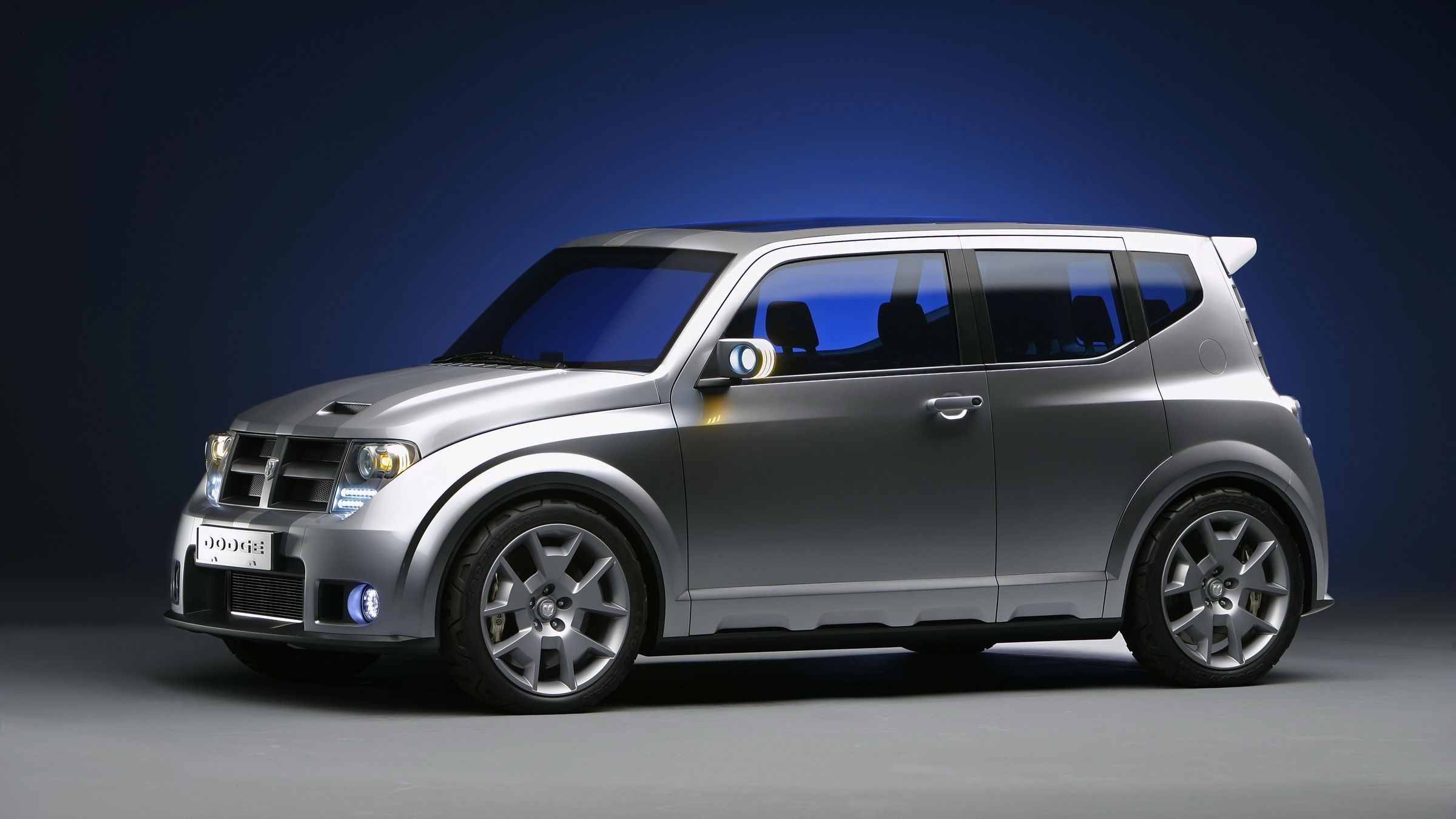
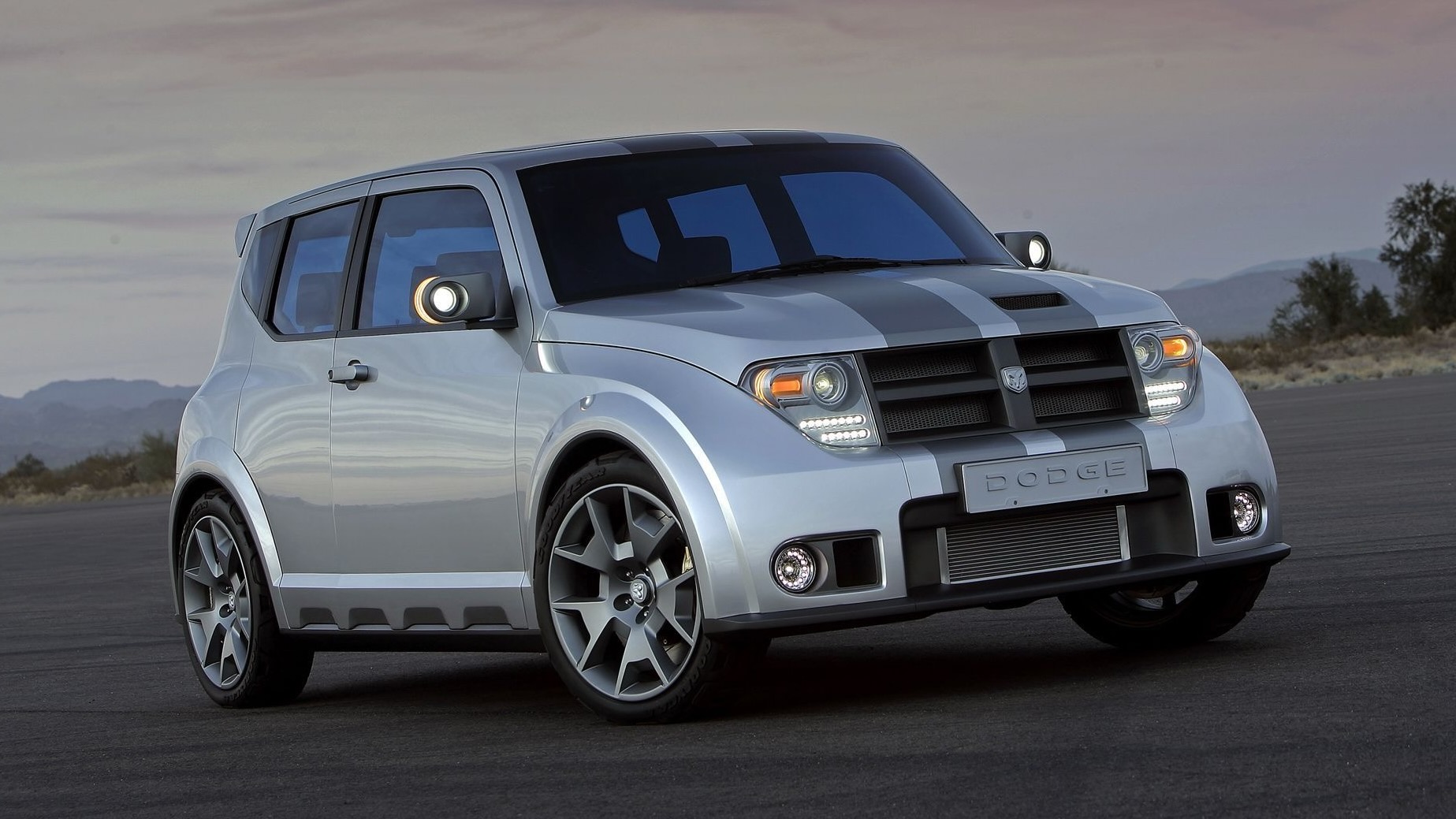
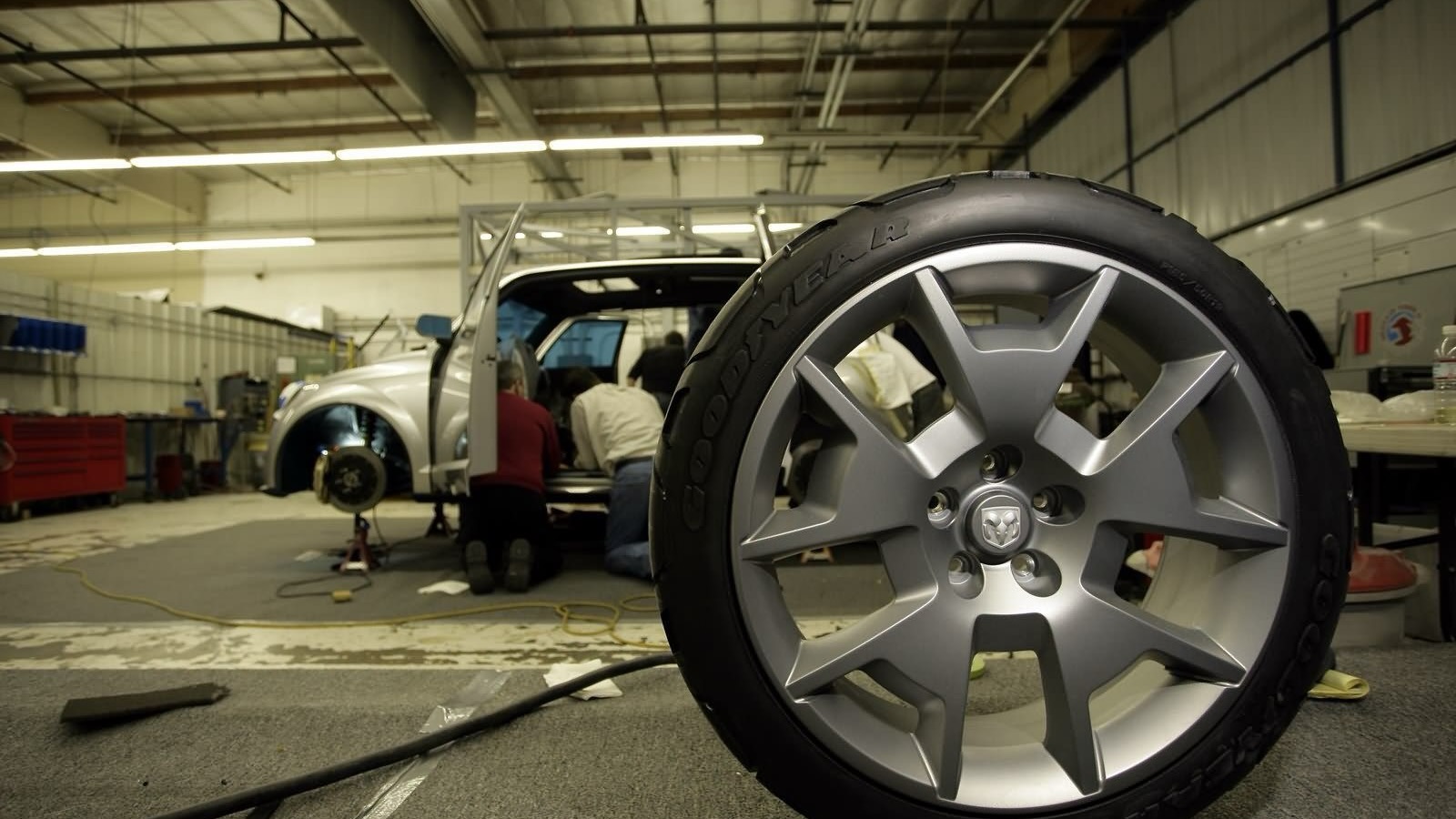
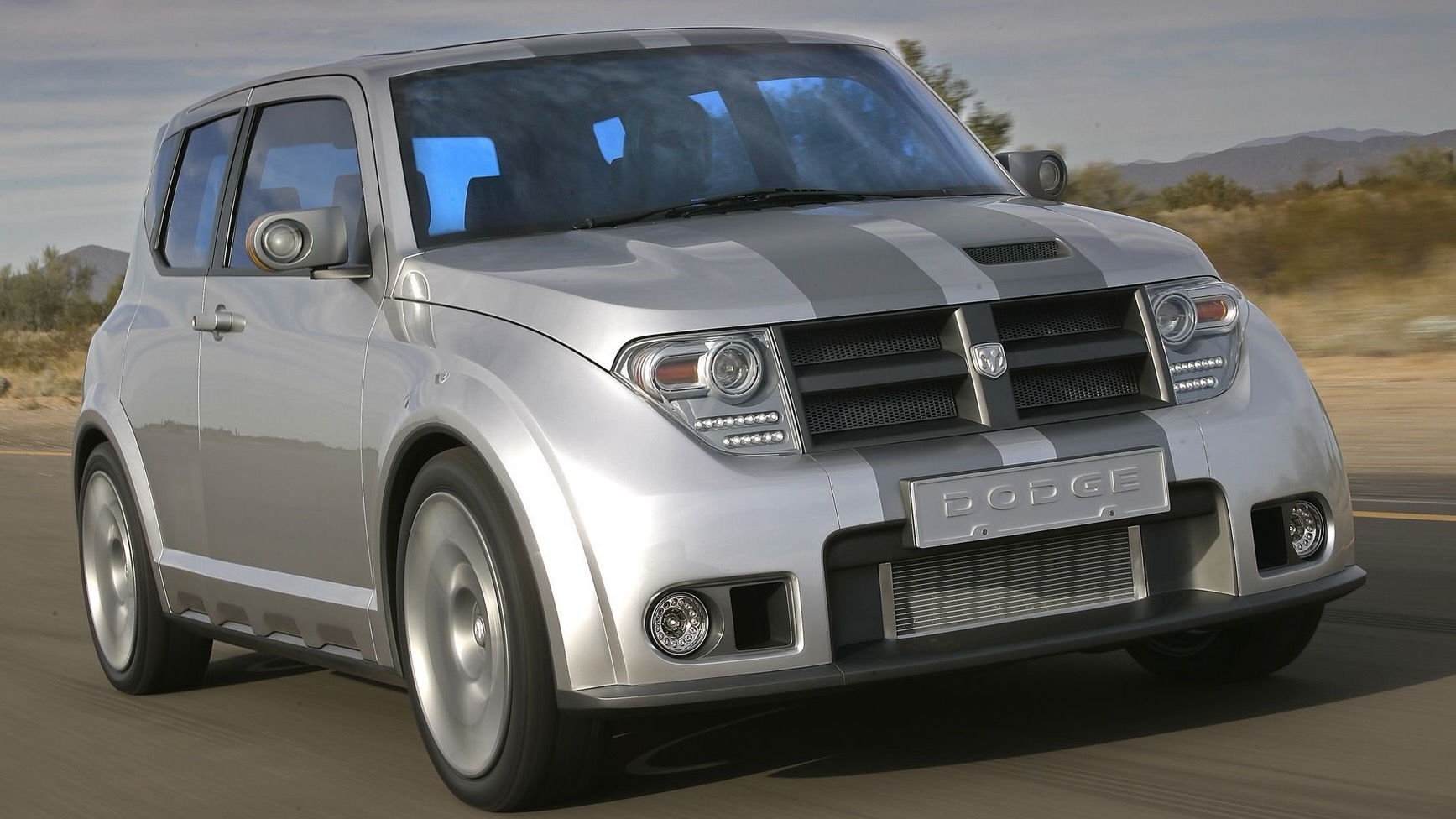
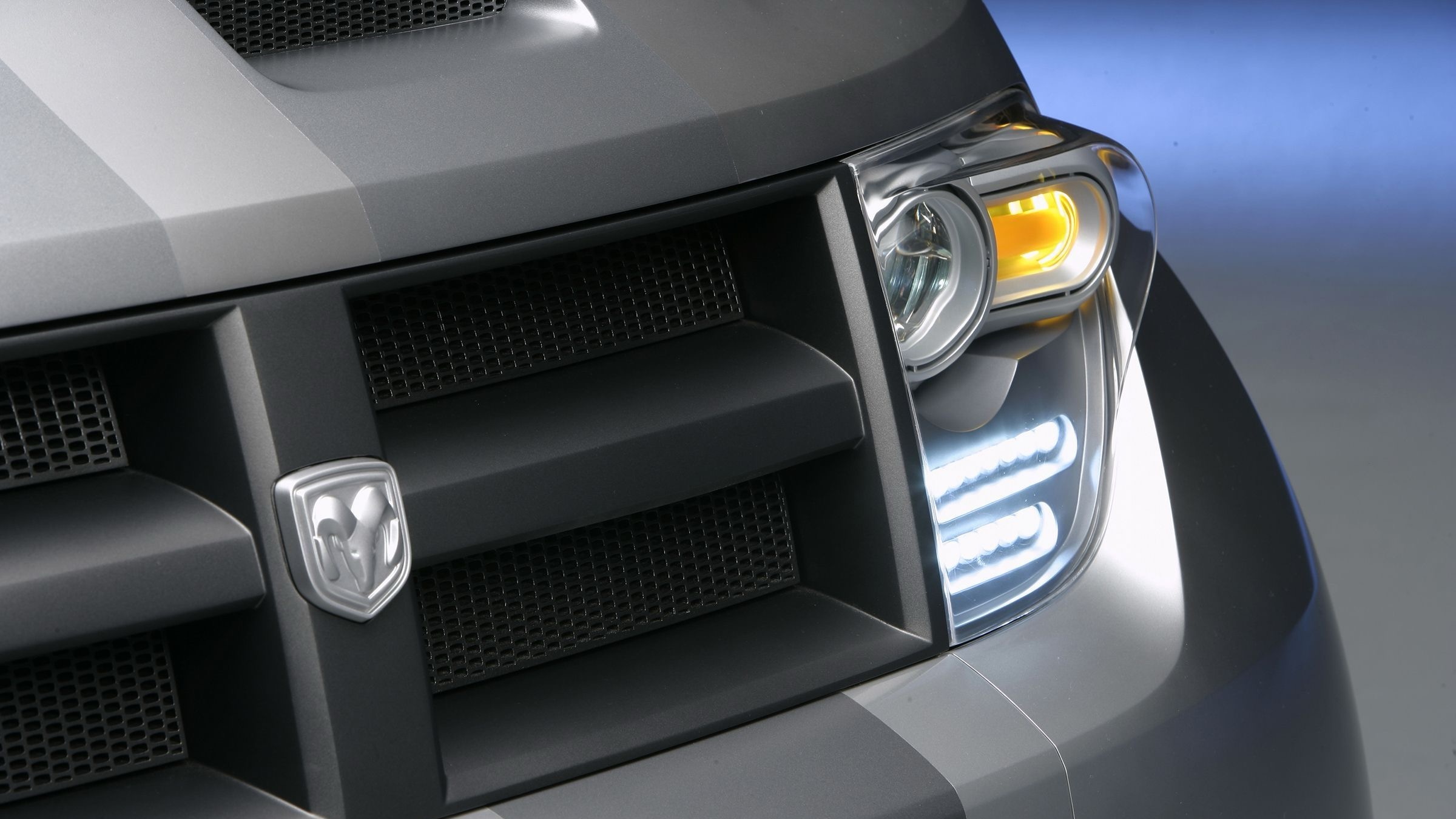
The 2007 Dodge Hornet Concept.
Dodge’s Early Attempt at a Global Small Car –
Long before subcompacts like the Fiat 500 and Chevy Spark briefly crashed the U.S. market, Dodge had ambitions of entering Europe with its own B-segment contender. Displayed at major European auto shows, the Hornet was a mini MPV designed to capture young, urban buyers worldwide.
And while kei cars are even smaller and more restrictive, the Hornet showed that Dodge wasn’t afraid to think tiny.
Key Specs: Compact by American Standards
-
Wheelbase: 100 in (2,540 mm)
-
Length: 151 in (3,835 mm)
-
Width: 76 in (1,930 mm)
-
Height: 62 in (1,575 mm)
-
Curb weight: 3,106 lbs (1,409 kg)
Under the hood, Dodge didn’t skimp. The concept featured a supercharged 1.6-liter Tritec I4, producing 170 horsepower (127 kW / 172 PS) — enough to send it from 0–60 mph (0–97 km/h) in 7.5 seconds and hit an estimated 135 mph (217 km/h) top speed. The engine came from a Chrysler-BMW joint venture in Brazil, paired to a 6-speed manual transmission.
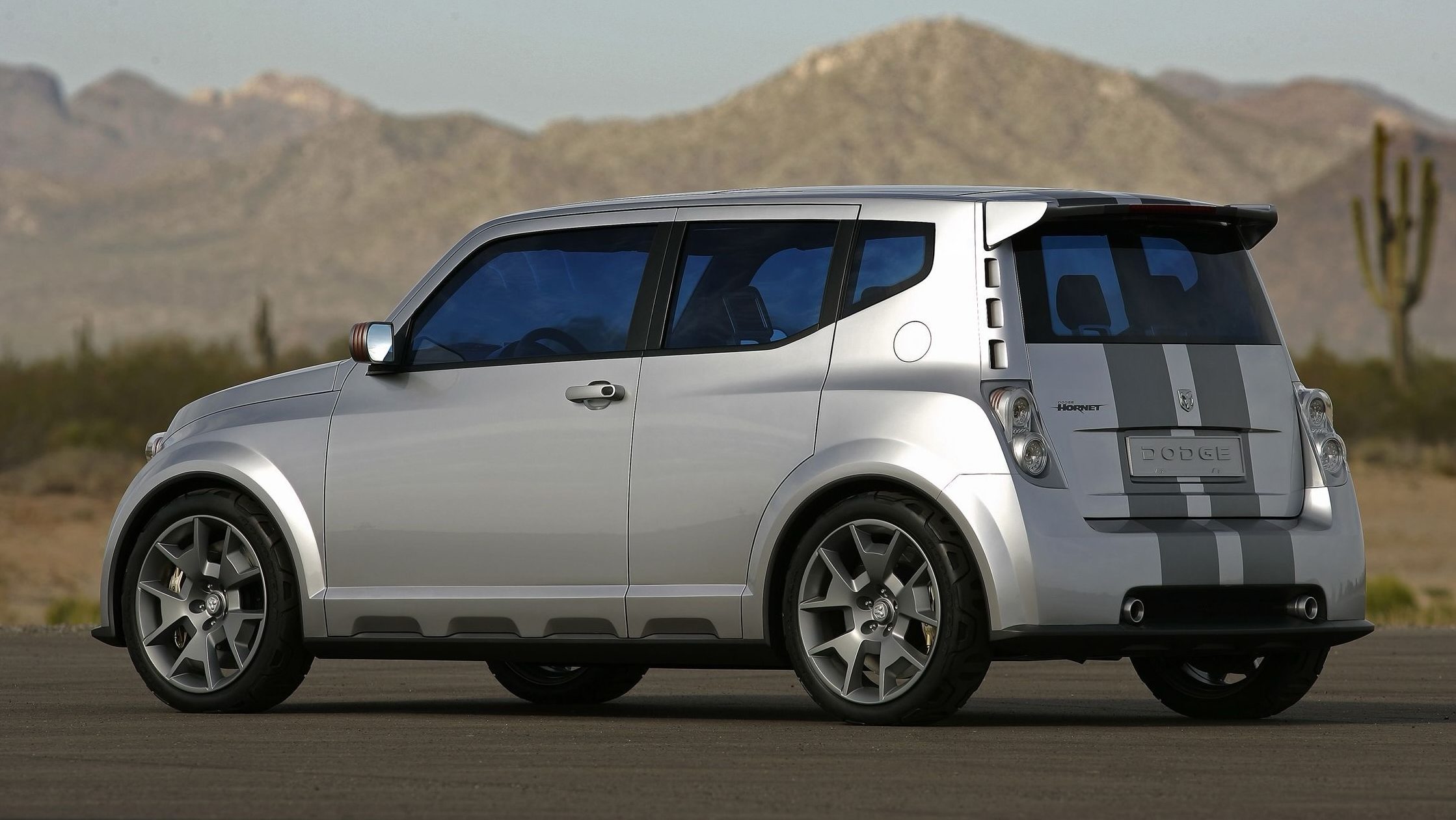
The Hornet mixed rugged Dodge styling with an urban-focused package: squared-off proportions, muscular fenders, and even rally-inspired themes. The rear doors used coach-style hinges — a quirky design meant to maximize interior access in tight spaces.
This wasn’t just Dodge making a small hatchback. It was Dodge trying to make a tough small hatchback.
A Bold Exterior for a Tiny Footprint –
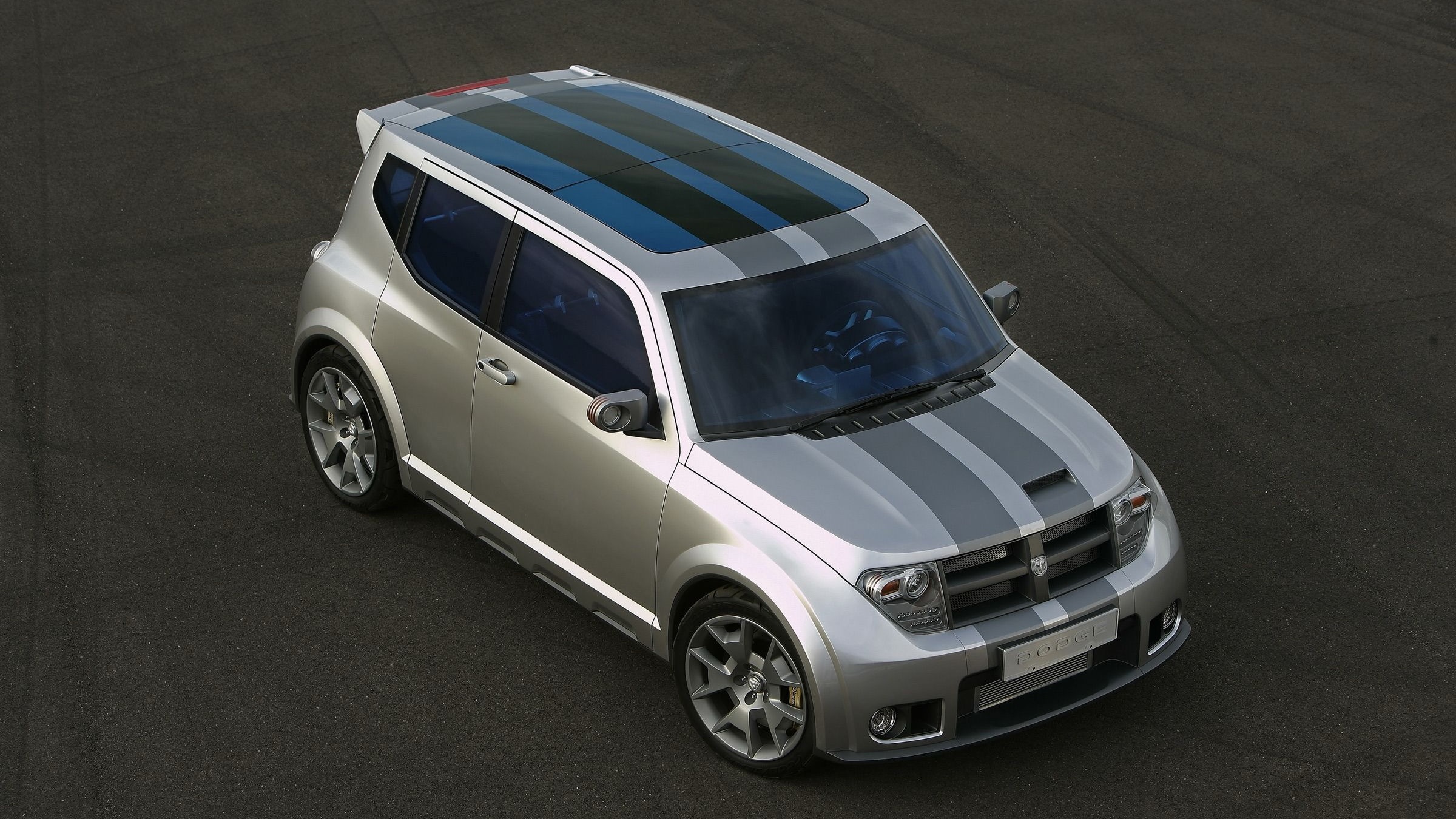
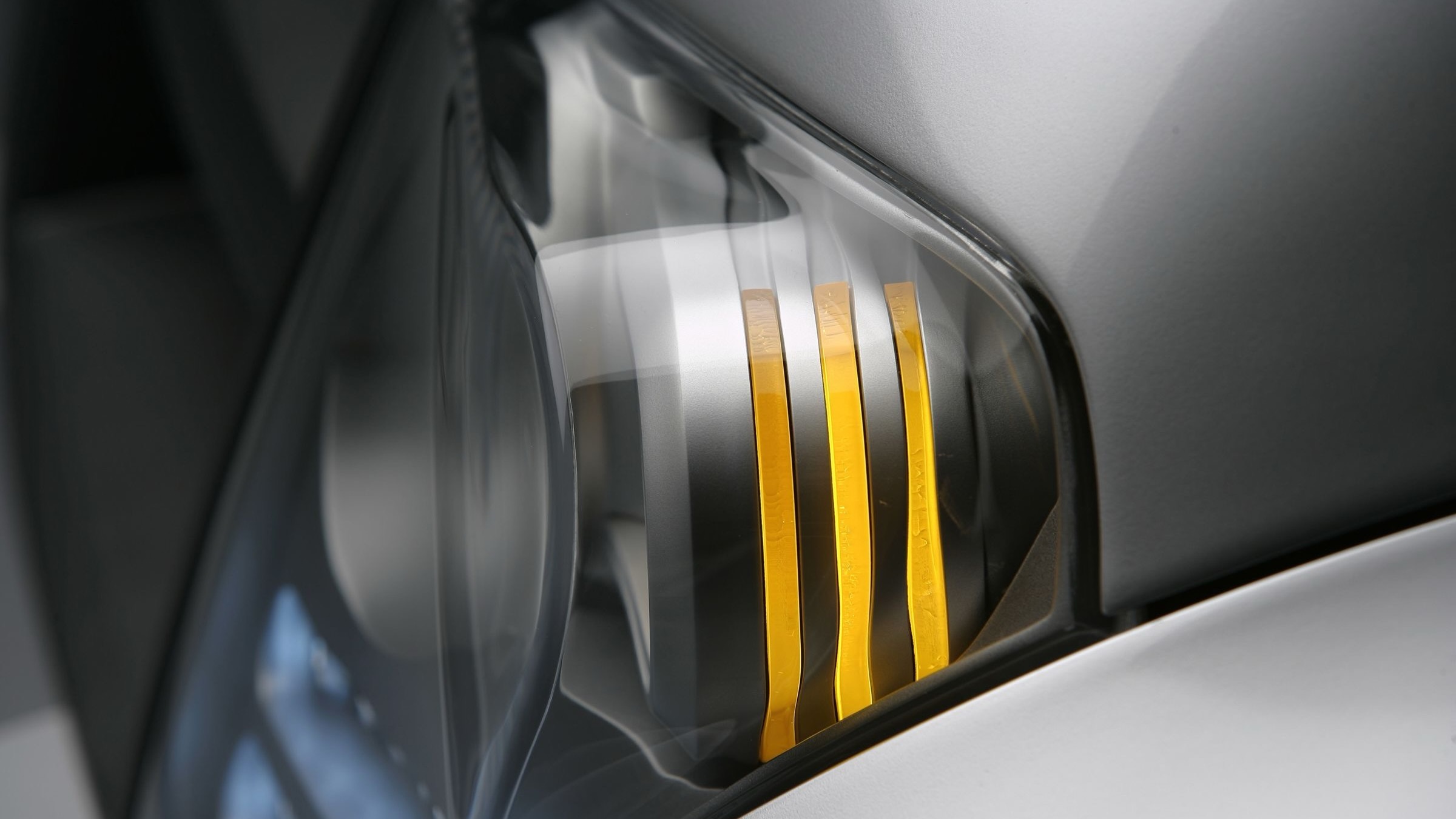
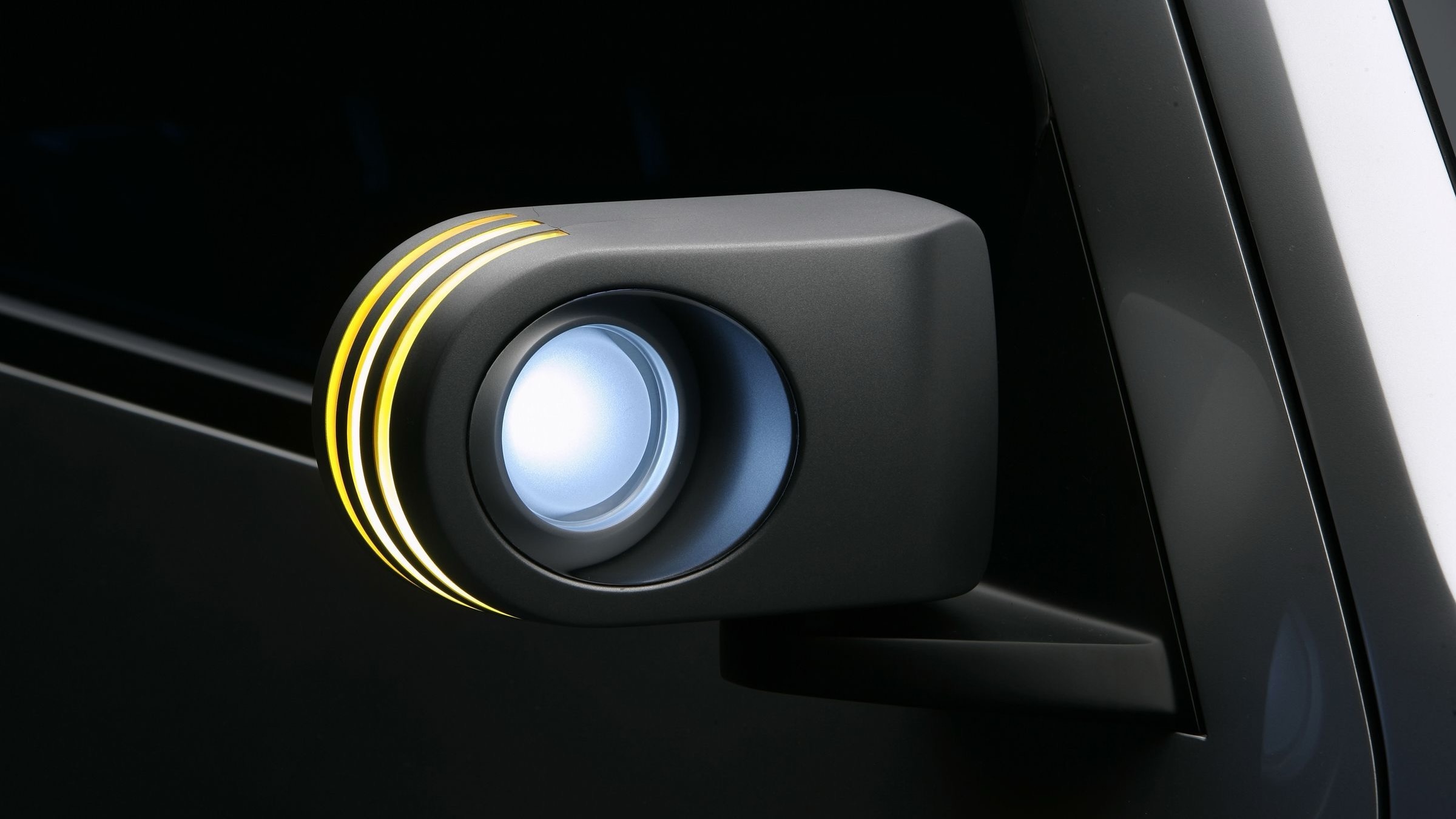
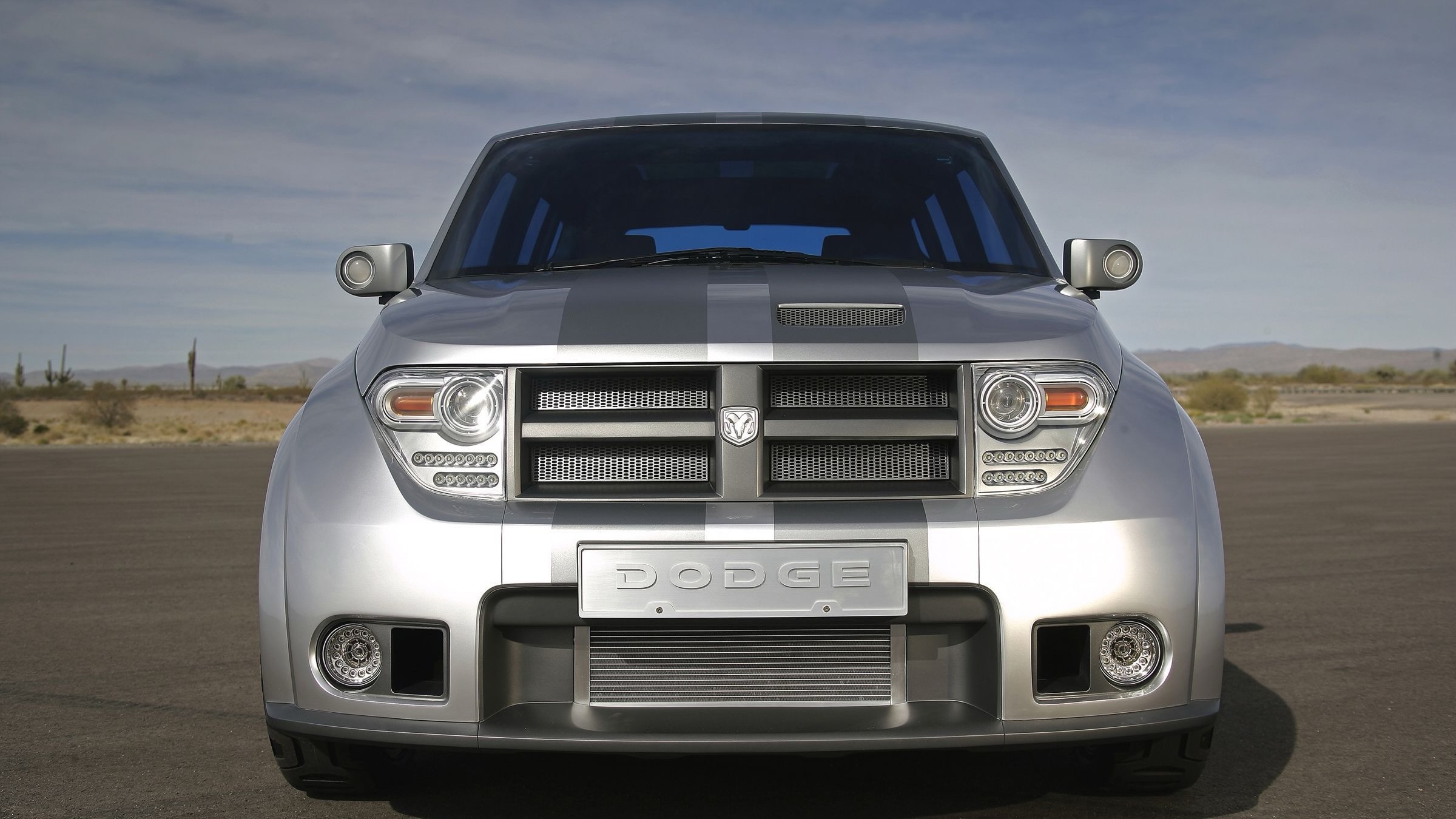
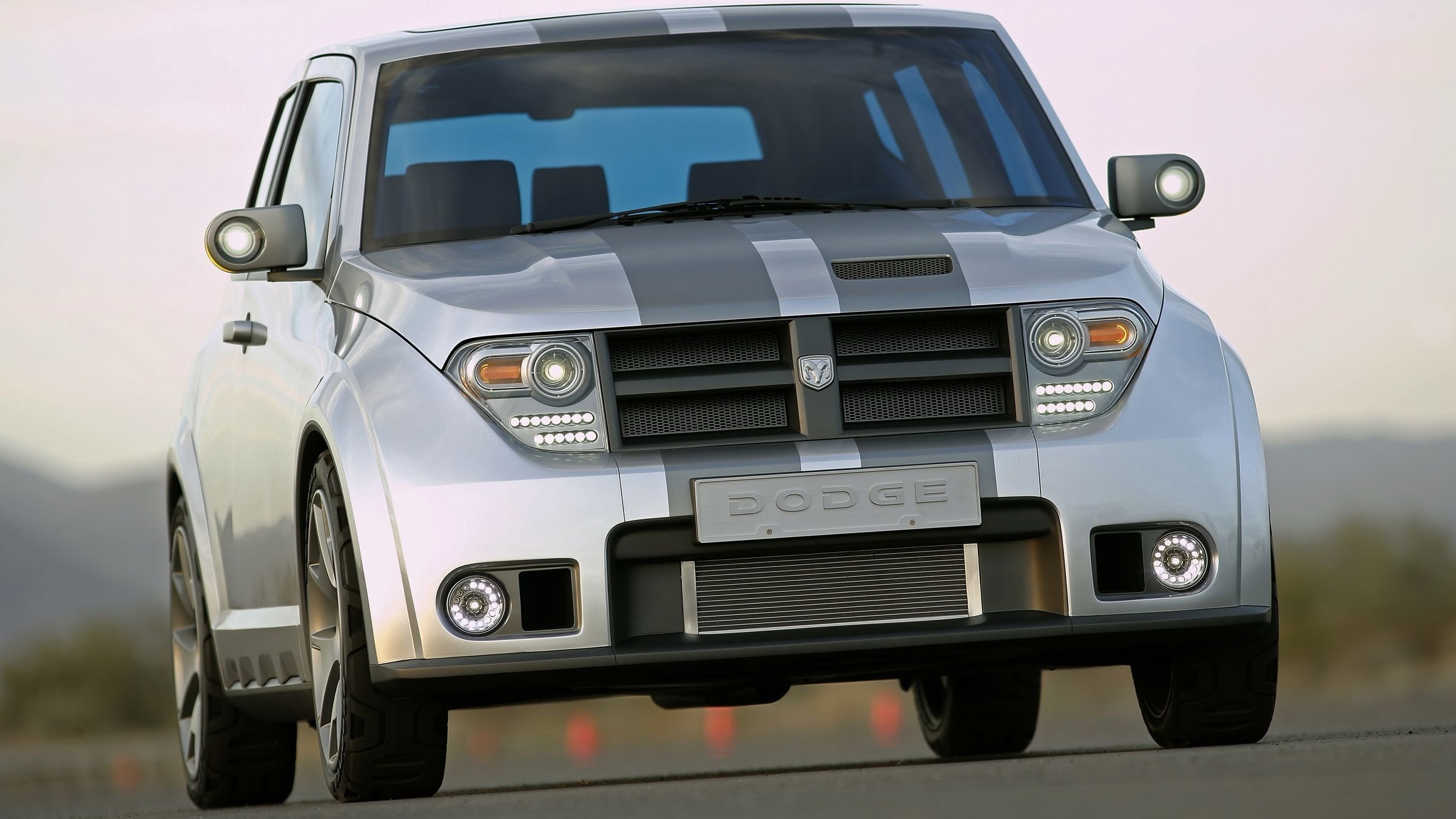
While many subcompacts of the mid-2000s leaned toward soft, friendly styling, Dodge went in the complete opposite direction. The Hornet looked like it was designed in a Detroit gym. The front end wore a shortened version of the brand’s trademark crosshair grille, deeply inset and flanked by chunky, square projector headlamps. A pronounced power-dome hood gave it a proper muscle-car stance, even at 151 inches long.
Large, upright A-pillars and a high roofline gave it a bit of a miniature SUV identity—think “scaled-down Nitro” rather than a jellybean econobox. The front and rear fenders had solid, squared-off shapes, giving the Hornet a planted look thanks to a surprisingly wide 76-inch body. This width wasn’t an accident — Dodge wanted the Hornet to feel secure at highway speeds and confident in corners.
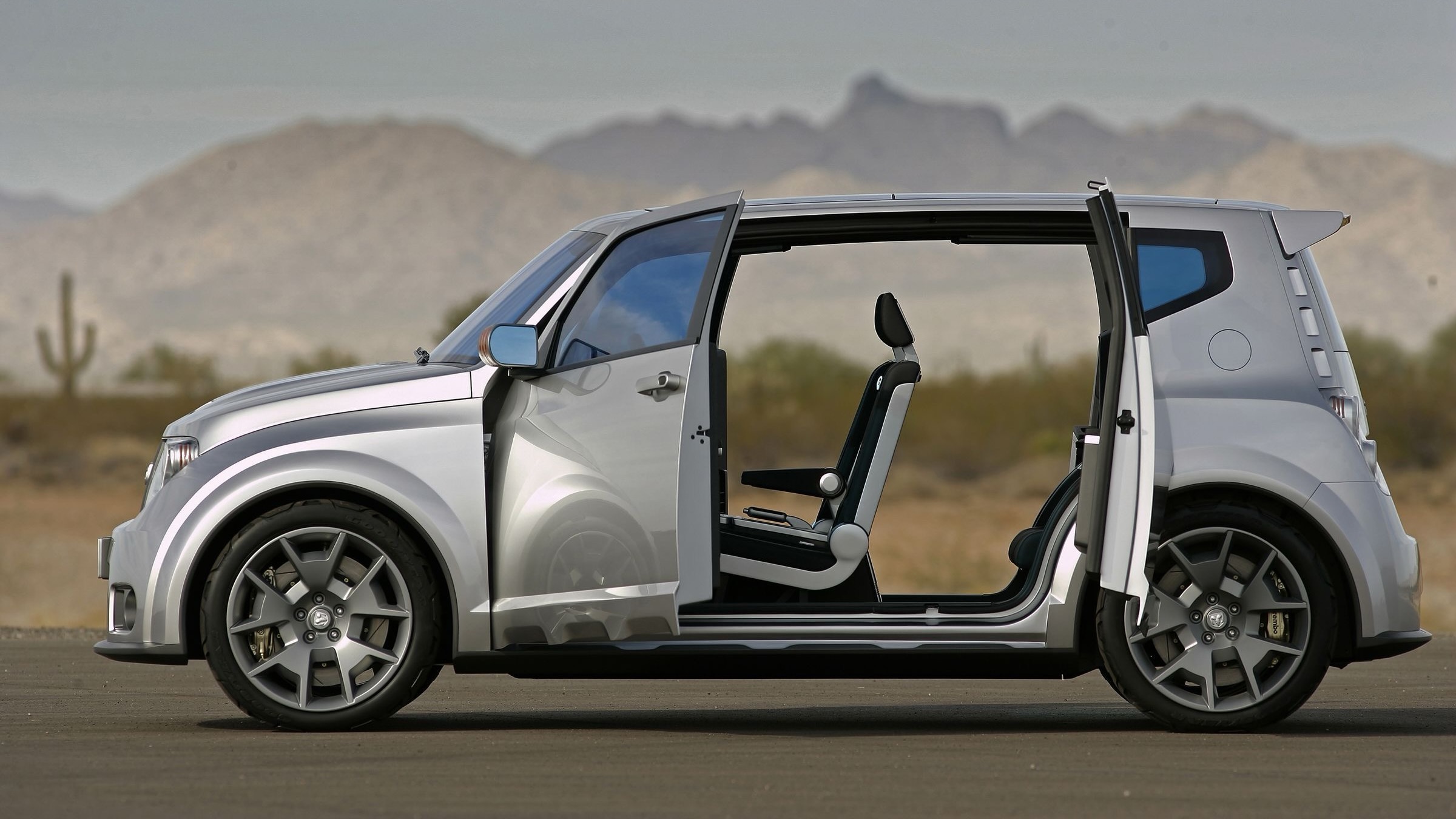
Other standout design cues included:
-
Coach-style rear doors that swung backward to maximize cabin access
-
Integrated roof rails for added utility
-
Short overhangs for improved urban maneuverability
-
Large five-spoke wheels, pushed outward for an aggressive track
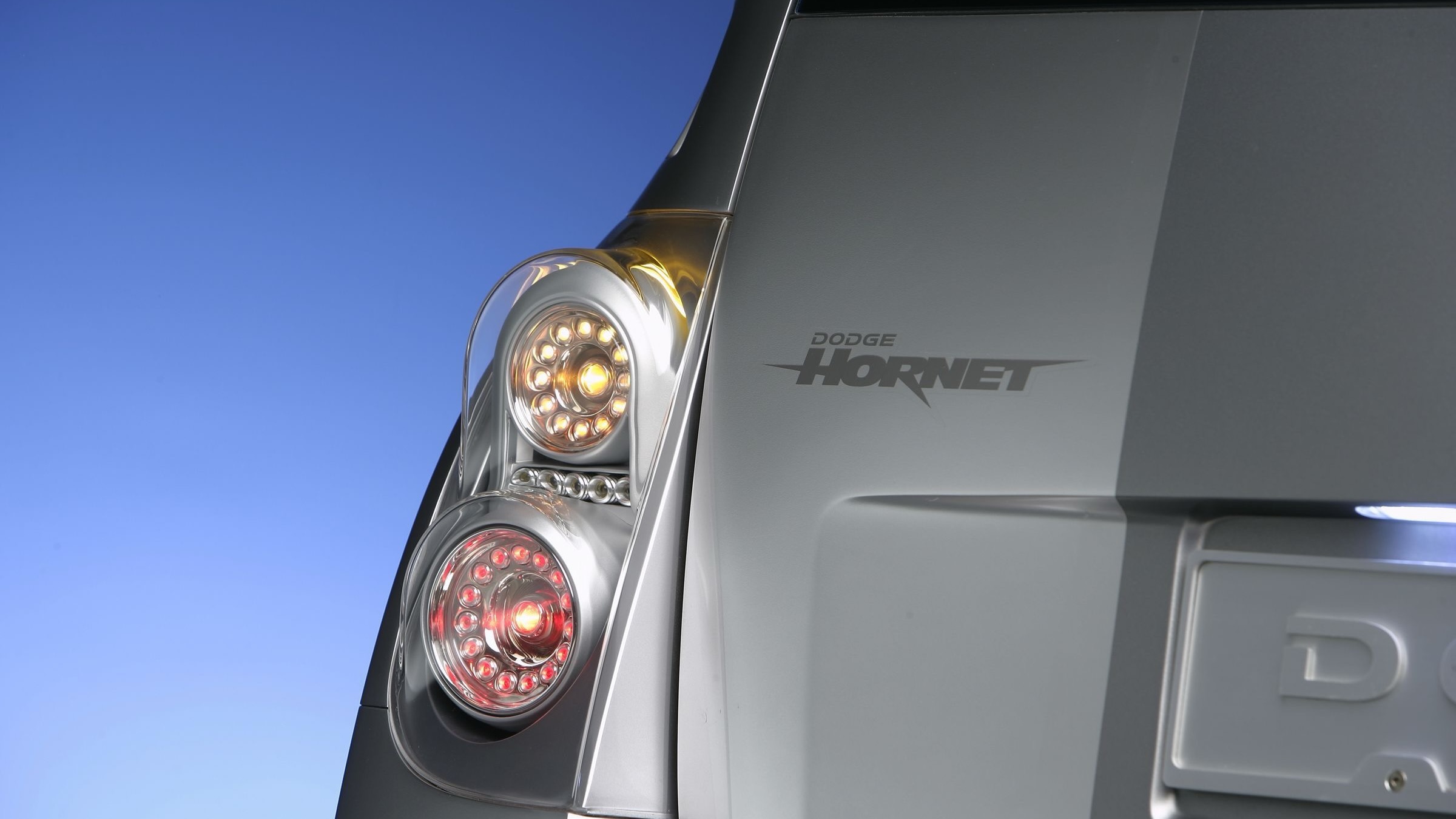
Even from behind, the Hornet looked brawny. A steeply raked rear glass and tall tail lamps brought a sense of attitude rarely found in B-segment vehicles at the time.
Dodge wanted people to look at it and say, “That’s cool — and also, what is that?”
Interior: Rugged Utility Meets Youthful Tech –
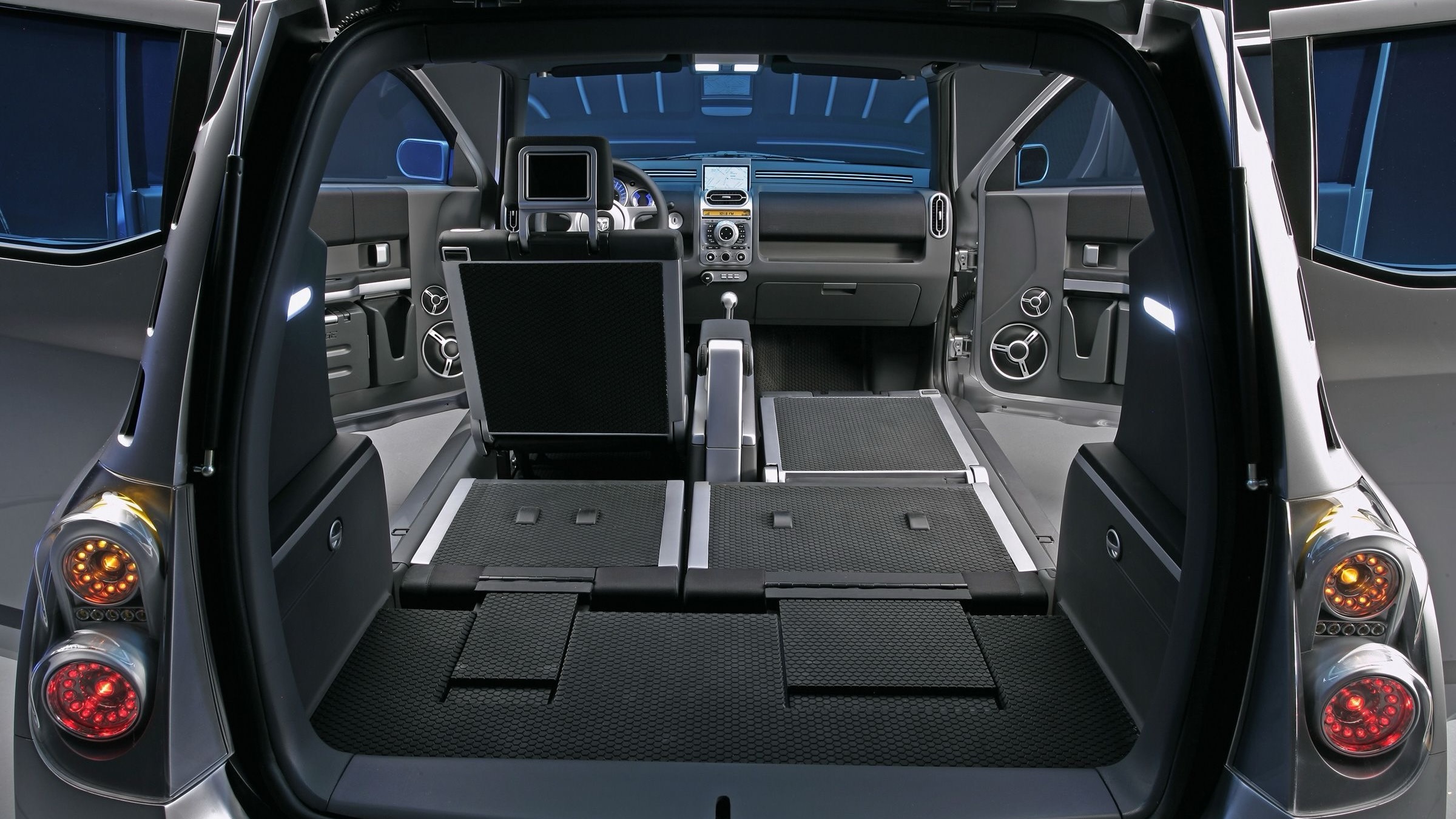
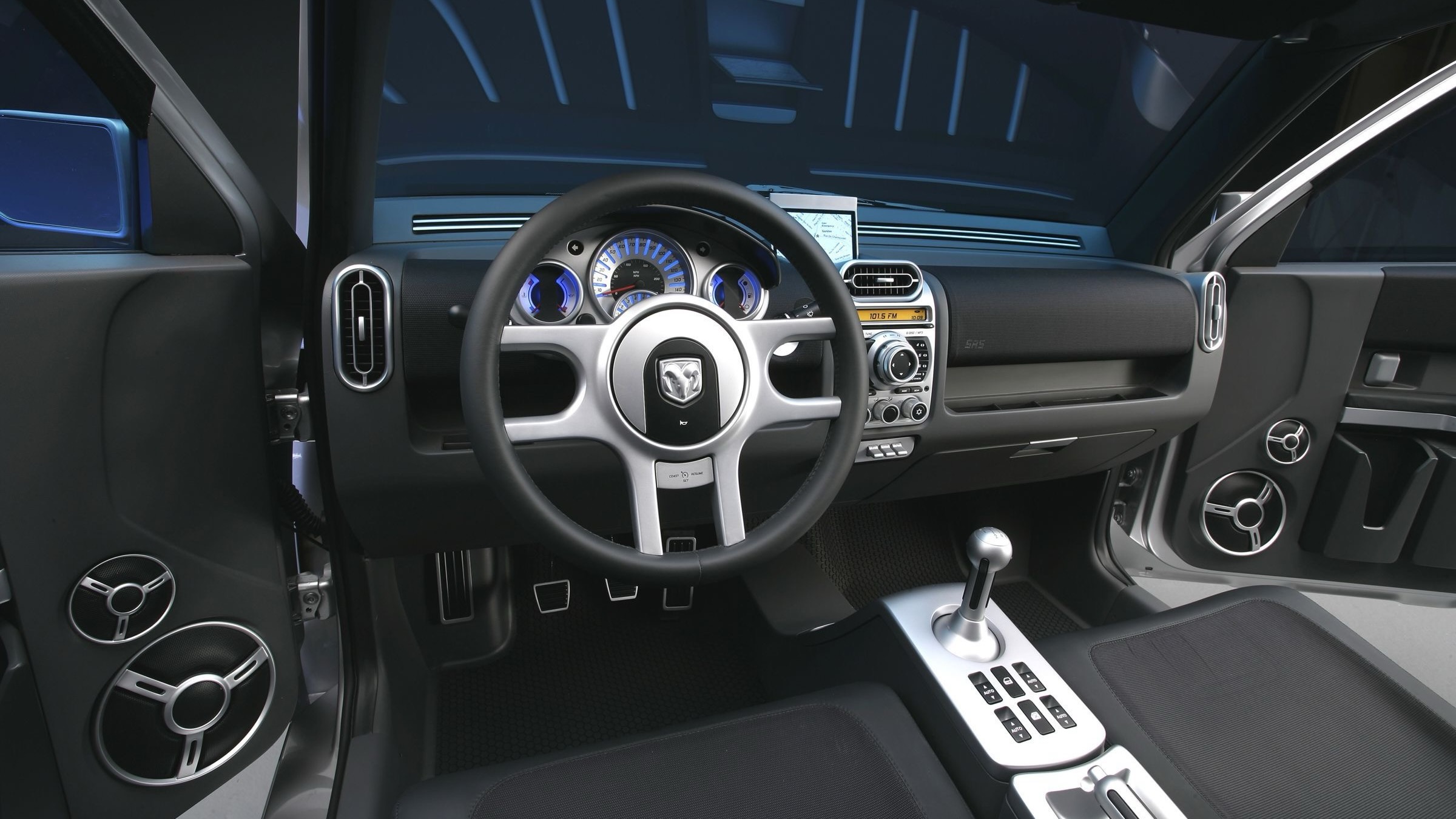
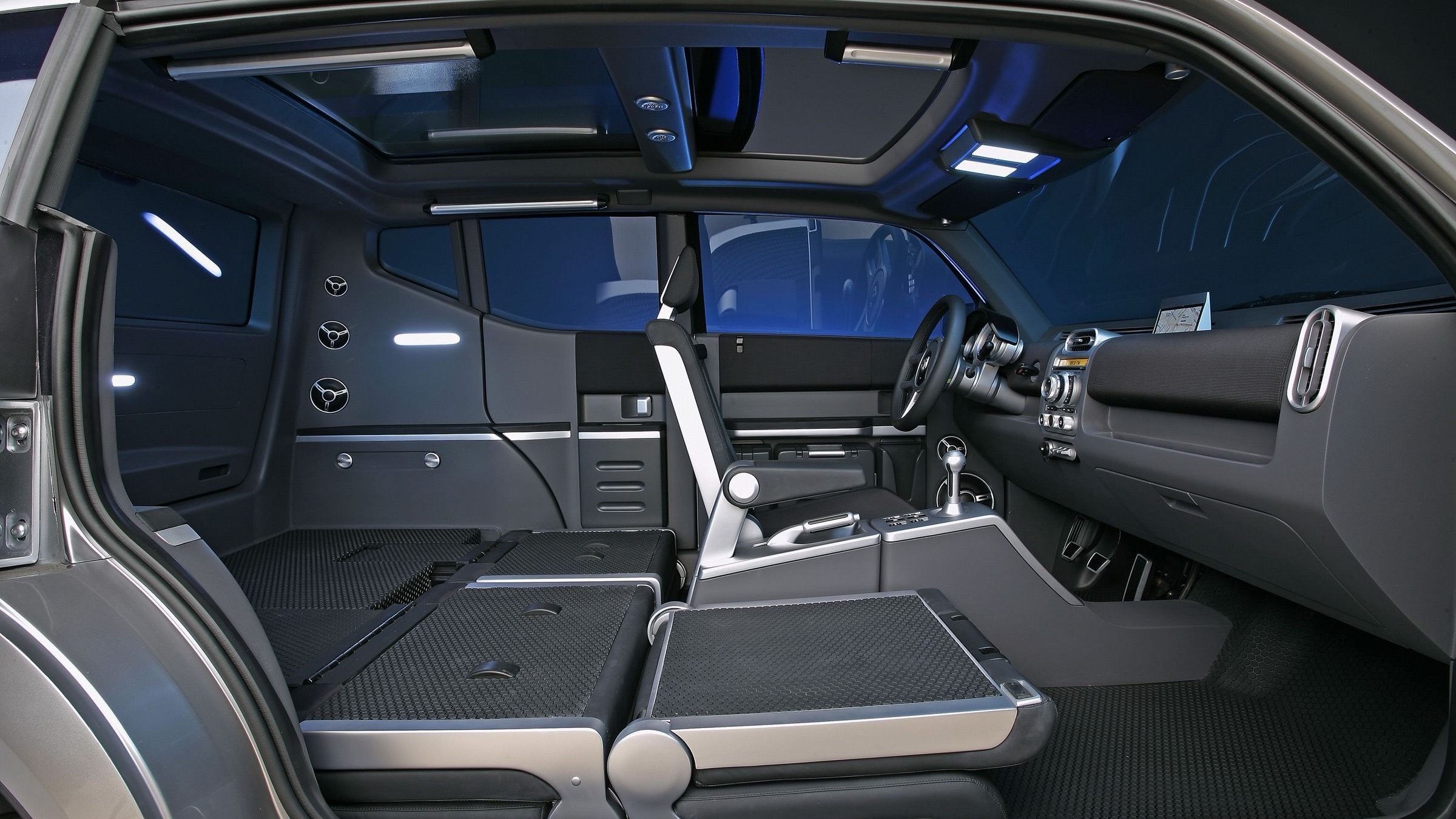
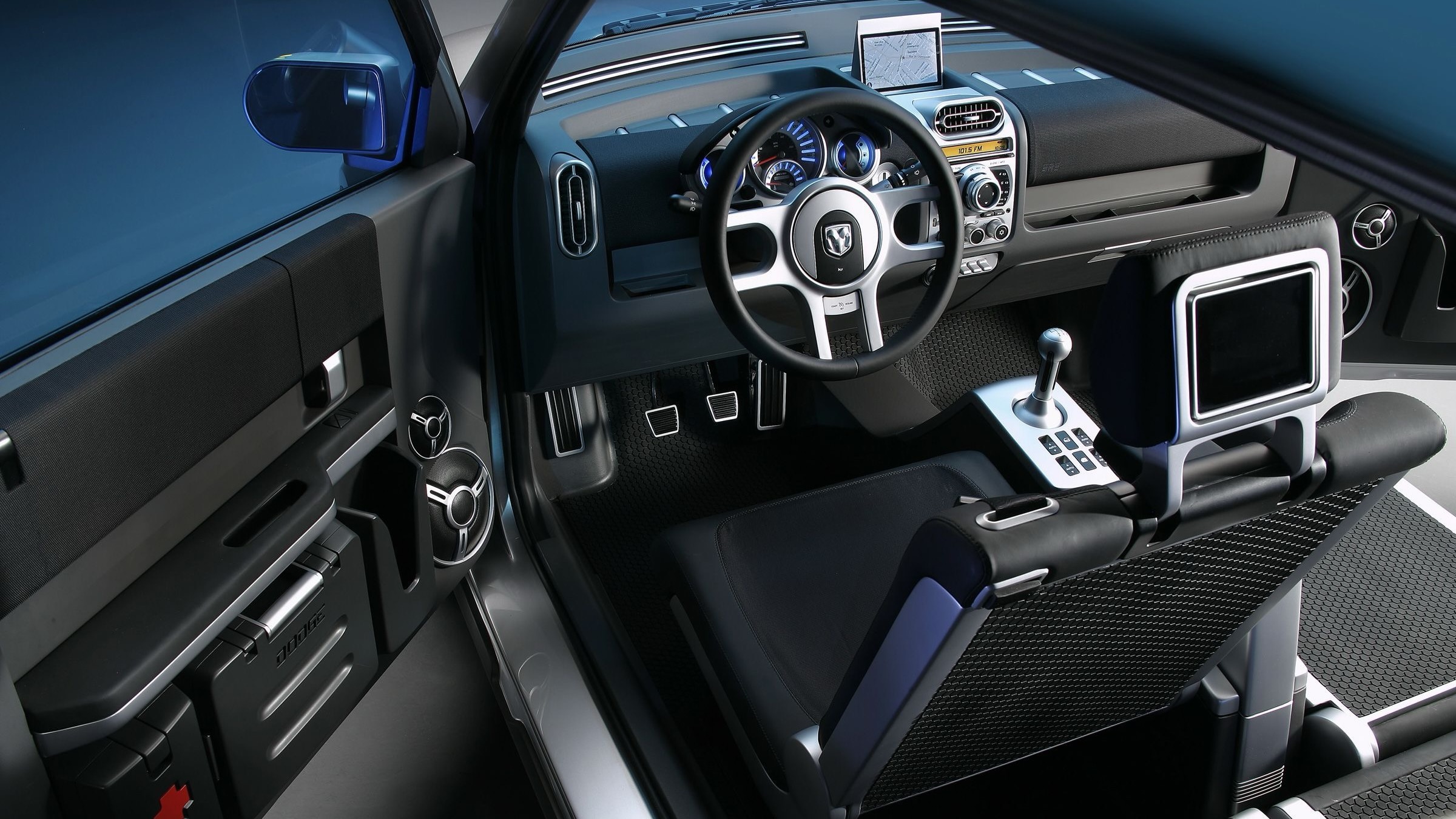
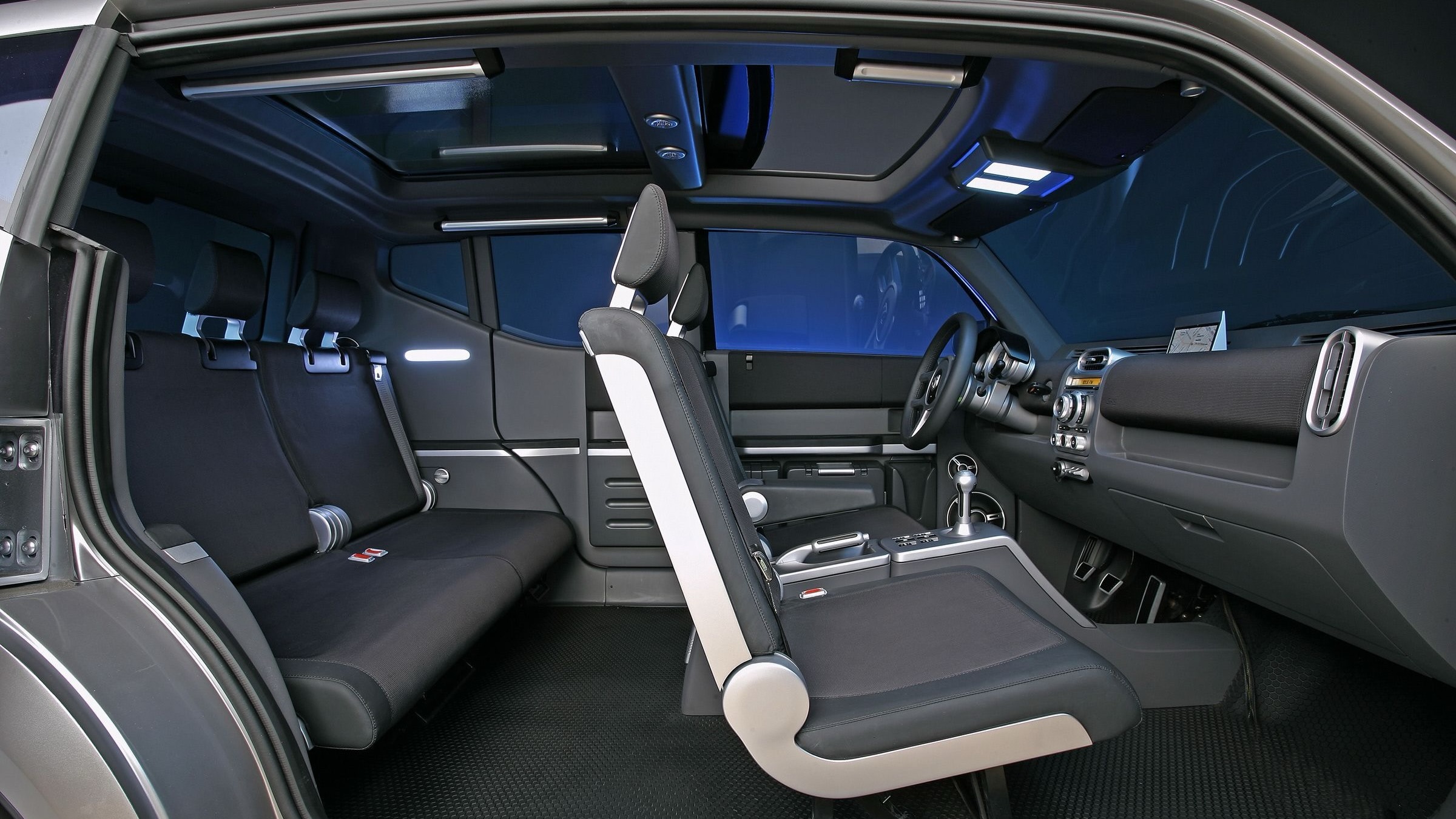
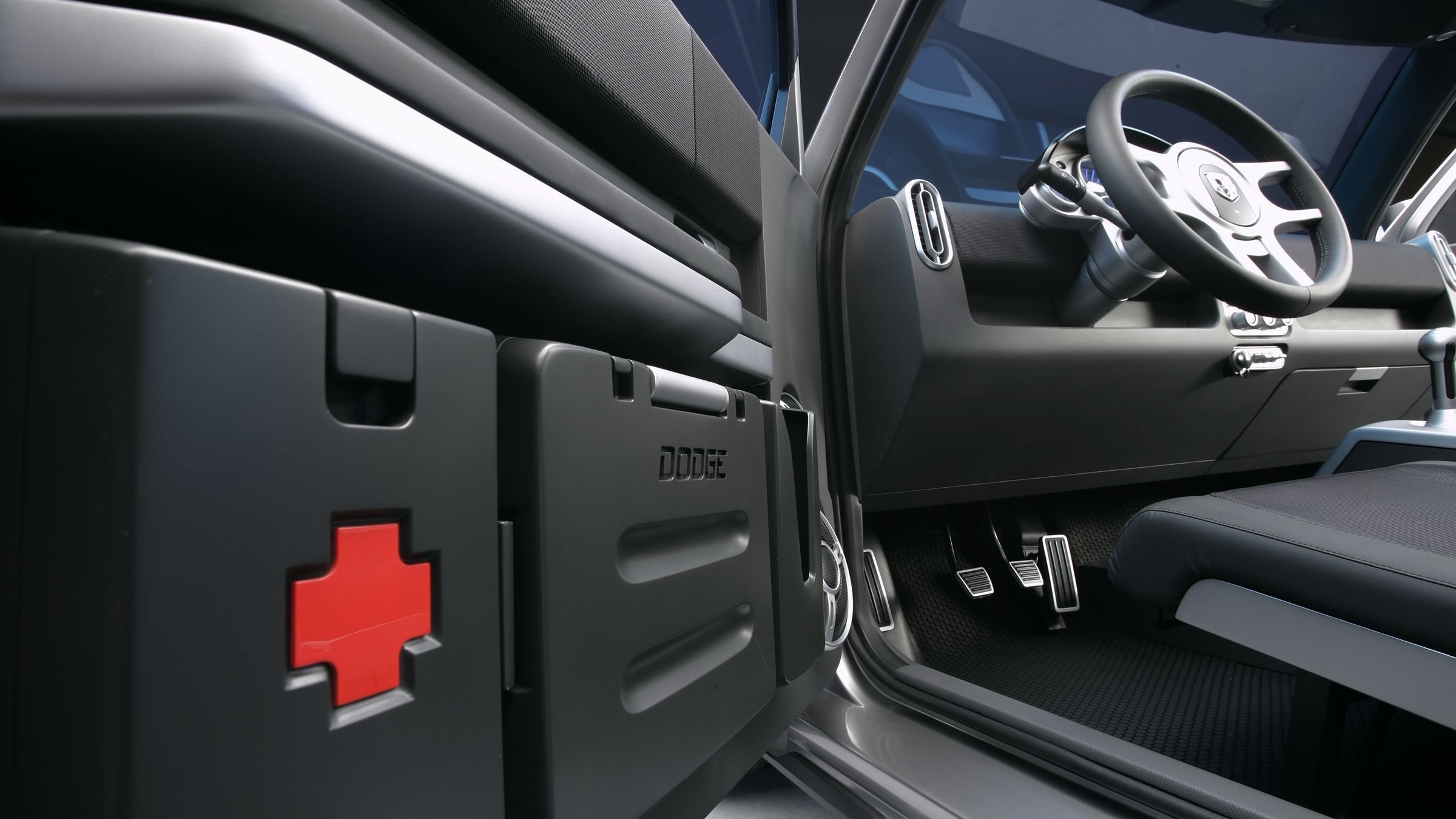
Inside, Dodge continued its “mini muscle” theme by prioritizing simplicity, functionality, and attitude. The Hornet was built around a modular interior layout, with seats and storage elements that could fold, slide, or detach entirely.
Key interior highlights included:
-
Aluminum interior framework, left partially exposed for a technical look
-
Rear seats that folded flat or removed completely, transforming the small cabin into a gear hauler
-
Honeycomb-textured interior surfaces, designed to be durable and scuff-resistant
-
Body-colored accents that matched the exterior, keeping the design playful
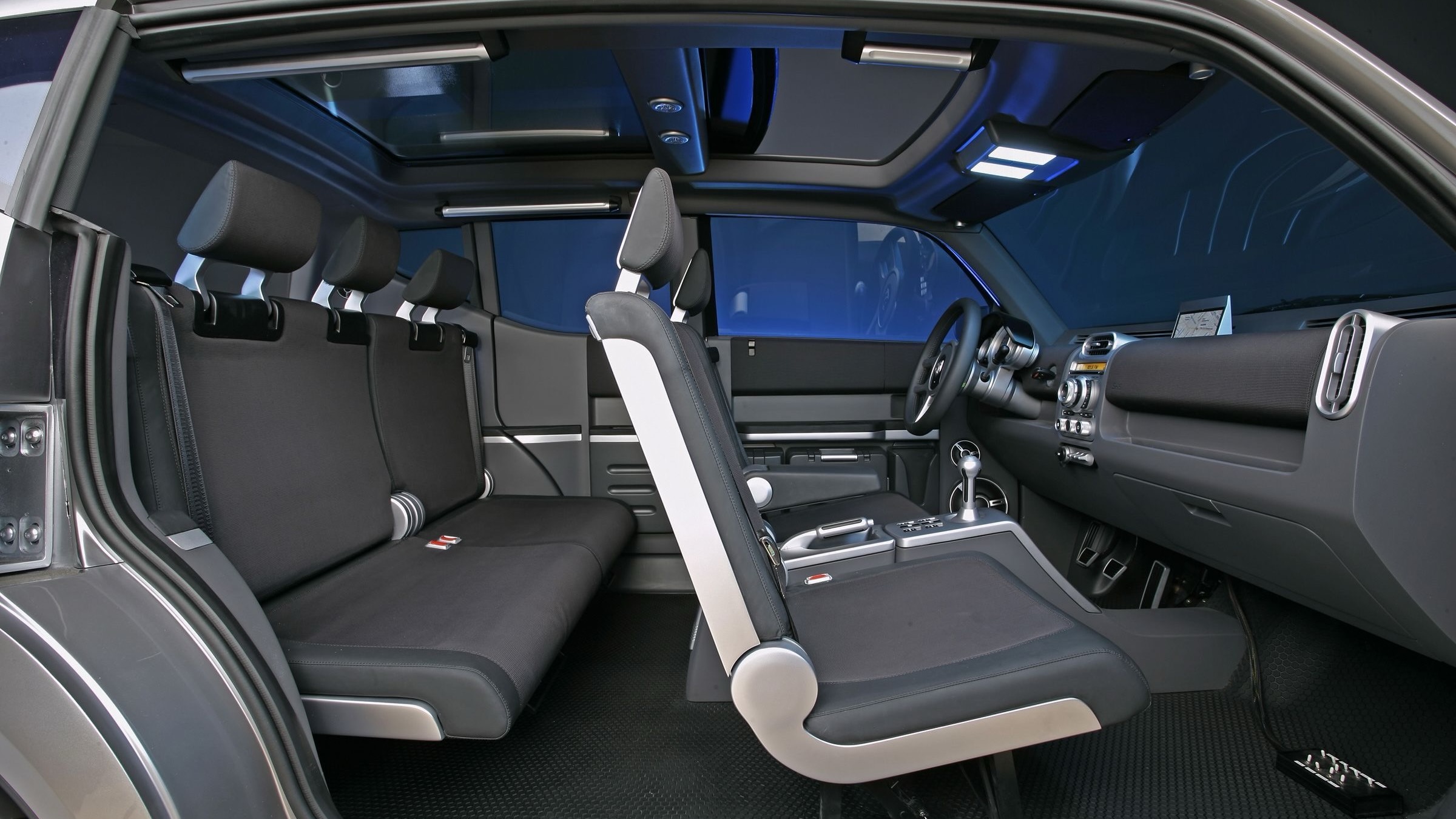
The gauge cluster and dash featured digital displays — forward-thinking for 2006 — offering a youthful tech vibe, while also letting Dodge experiment with future infotainment possibilities. Even the steering wheel had a squared-off, motorsport-inspired design.
In short, the Hornet wasn’t trying to be cute. It was trying to be useful, sporty, and urban-rugged — a tiny Dodge that could still haul your friends and mountain bikes.
How It Compared to Today’s Jeep® Avenger –
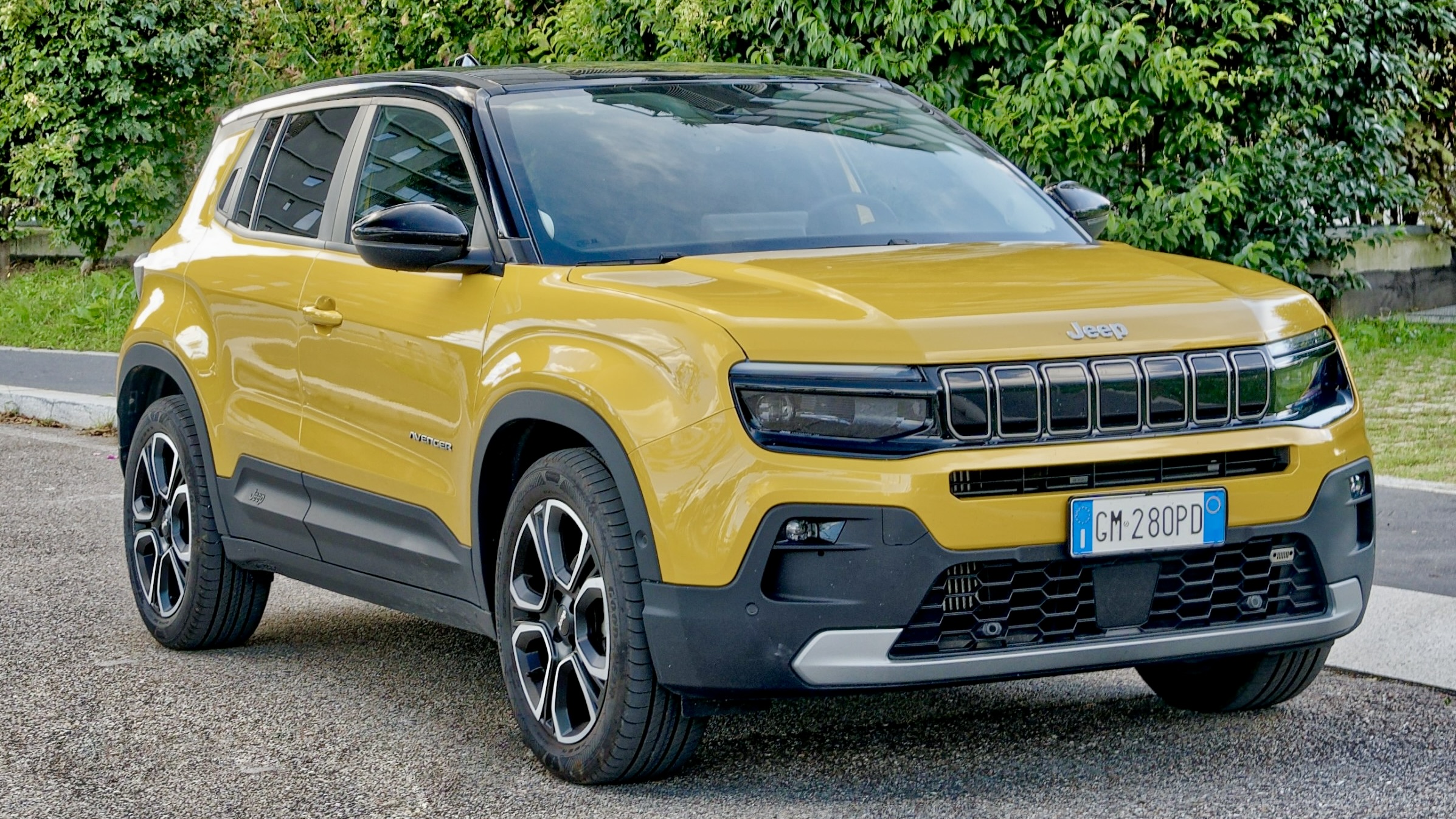
To show how ambitious the Hornet was for its time, here’s how it stacks up against the tiniest Jeep®, the Avenger, a model now sold in global markets:
| Specification | 2007 Dodge Hornet Concept | Jeep Avenger |
|---|---|---|
| Wheelbase | 100 in (2,540 mm) | 100.8 in (2,560 mm) |
| Length | 151 in (3,835 mm) | 160.8 in (4,084 mm) |
| Width | 76 in (1,930 mm) | 69.9 in (1,776 mm) |
| Height | 62 in (1,575 mm) | 60.2 in (1,528 mm) |
| Curb Weight | 3,106 lbs (1,409 kg) | 2,606–3,386 lbs (1,182–1,536 kg) |
So despite being nearly 10 inches (249 mm) shorter, the Hornet was actually wider — more U.S.-friendly from a stance and handling perspective. It wasn’t meant to feel like an economy car. It was meant to feel like a shrunken Dodge.
Why the Hornet Never Happened –
Dodge planned to launch the Hornet around 2010. Automakers were exploring partnerships, and the Hornet was even lined up to use the Nissan Versa platform at one point. But timing is everything, and the Great Recession hit like a freight train.
Chrysler entered Chapter 11 bankruptcy, priorities shifted toward survival, and the Hornet was quietly shelved. A decade later, the Hornet name would resurface — but on a compact crossover, not a mini MPV.
In many ways, it was a victim of its era. Gas prices were swinging wildly. Trucks and SUVs still dominated. And Americans weren’t asking for tiny hatches.
Which brings us back to today…
Could a Modern Hornet-Sized Dodge Work Now? –
President Trump believes these small vehicles could “help solve the auto affordability crisis”, offering cheaper, fuel-efficient options for everyday drivers.
But kei-style cars face real hurdles:
-
Safety redesigns to handle 5,000-lb pickups on U.S. highways
-
Massive investment costs for a small-car gamble
-
Consumer tastes still leaning toward SUVs
-
State-level registration bans on tiny imports
Even today, the only way to get a genuine kei car on U.S. roads is to import one that’s at least 25 years old, a niche hobby for diehard fans.
Could something like the Hornet Concept succeed in today’s world? Maybe — there is a real need for more affordable vehicles in the U.S. As Stellantis prepares to bring the Fiat Topolino to the U.S., perhaps the spark that once fueled the Hornet Concept will finally ignite again.
If tiny cars really are America’s next trend… Dodge already sketched out a blueprint nearly 20 years ago.
2007 Dodge Hornet Concept Image Gallery: