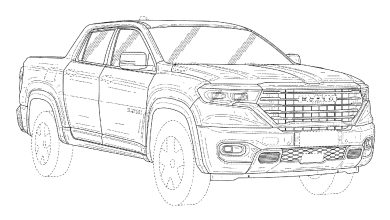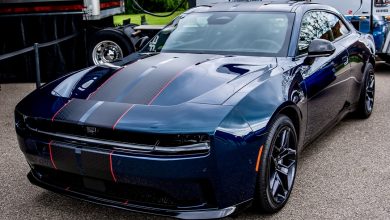

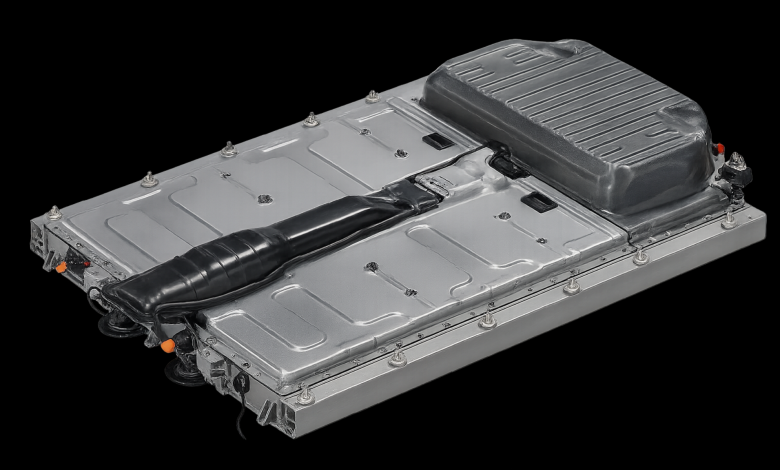
Stellantis (FCA US, LLC) just took a big step toward making future electric vehicles safer. The United States Patent and Trademark Office (USPTO) has granted the company a new patent for an electric vehicle (EV) battery thermal-runaway suppression system, filed on May 28, 2024, and granted on December 4, 2025.
In plain English, this is a built-in emergency fire-suppression system inside the battery pack itself, designed to react when a battery cell starts to fail and heat up uncontrollably. Instead of waiting for that heat to turn into a full-blown fire, the system is designed to attack the problem immediately with a specialized foam mixture.
For future Chrysler, Dodge, Jeep®, FIAT, and Ram EVs and range-extending electric vehicles (REEVs), this kind of tech could become a major selling point—especially for customers still uneasy about EV battery fires.
What Problem Is Stellantis Solving? –
Most modern EVs use lithium-ion or lithium-metal battery cells. Under normal use, they’re safe and efficient. But in a failure scenario—like physical damage, internal short circuits, or severe overheating—one or more cells can enter thermal runaway.
When that happens, the cell temperature rises rapidly, gases are released (some of which are flammable), and heat can spread to neighboring cells. If those gases ignite, you’ve got a battery fire that can be extremely difficult to contain. Fire departments often have to flood battery packs with thousands of gallons of water just to cool them down enough to stop the reaction.
Stellantis’ new system is designed to catch that process early and smother it from the inside, using the battery pack’s own cooling system plus a dedicated fire-retardant supply.
How The System Is Built Inside The Pack –
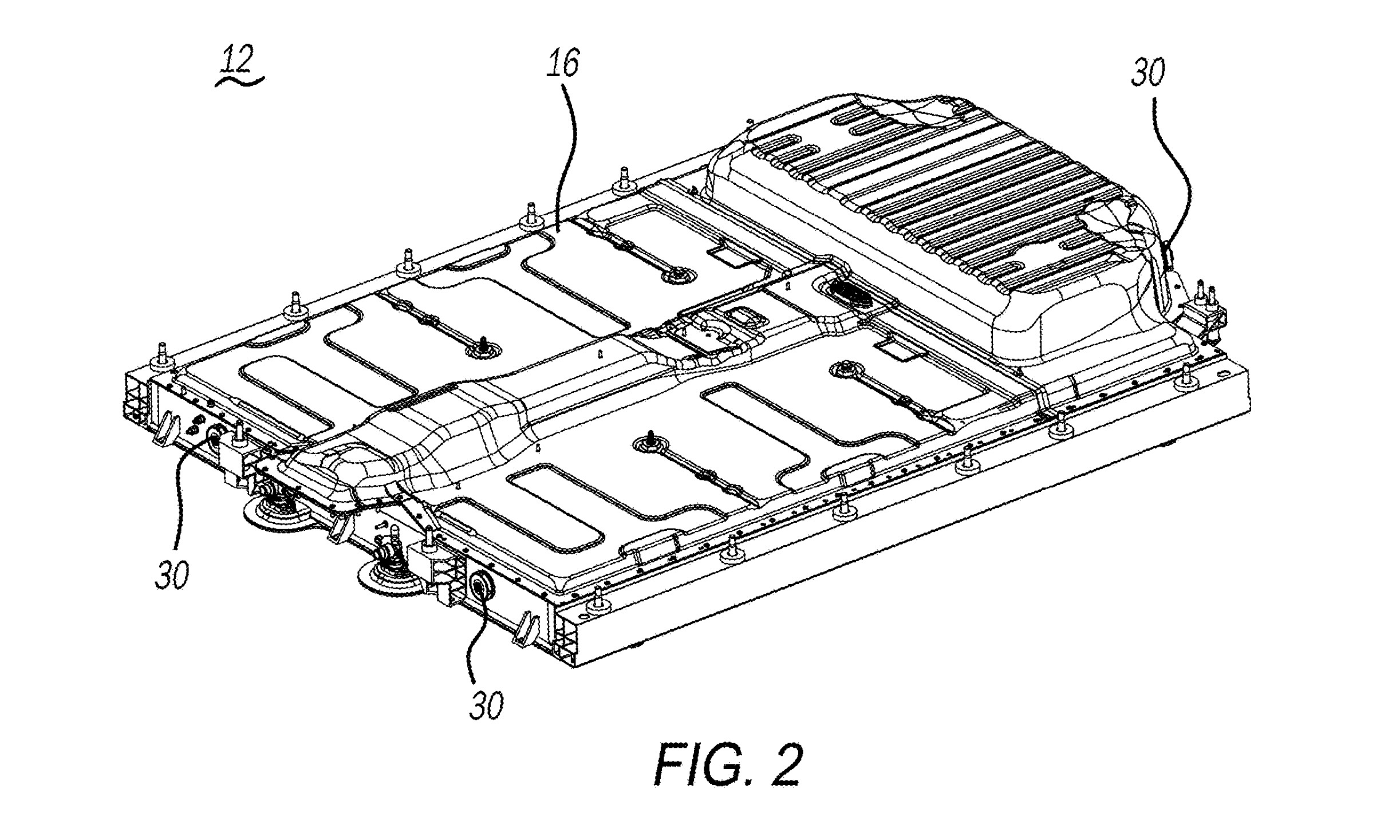
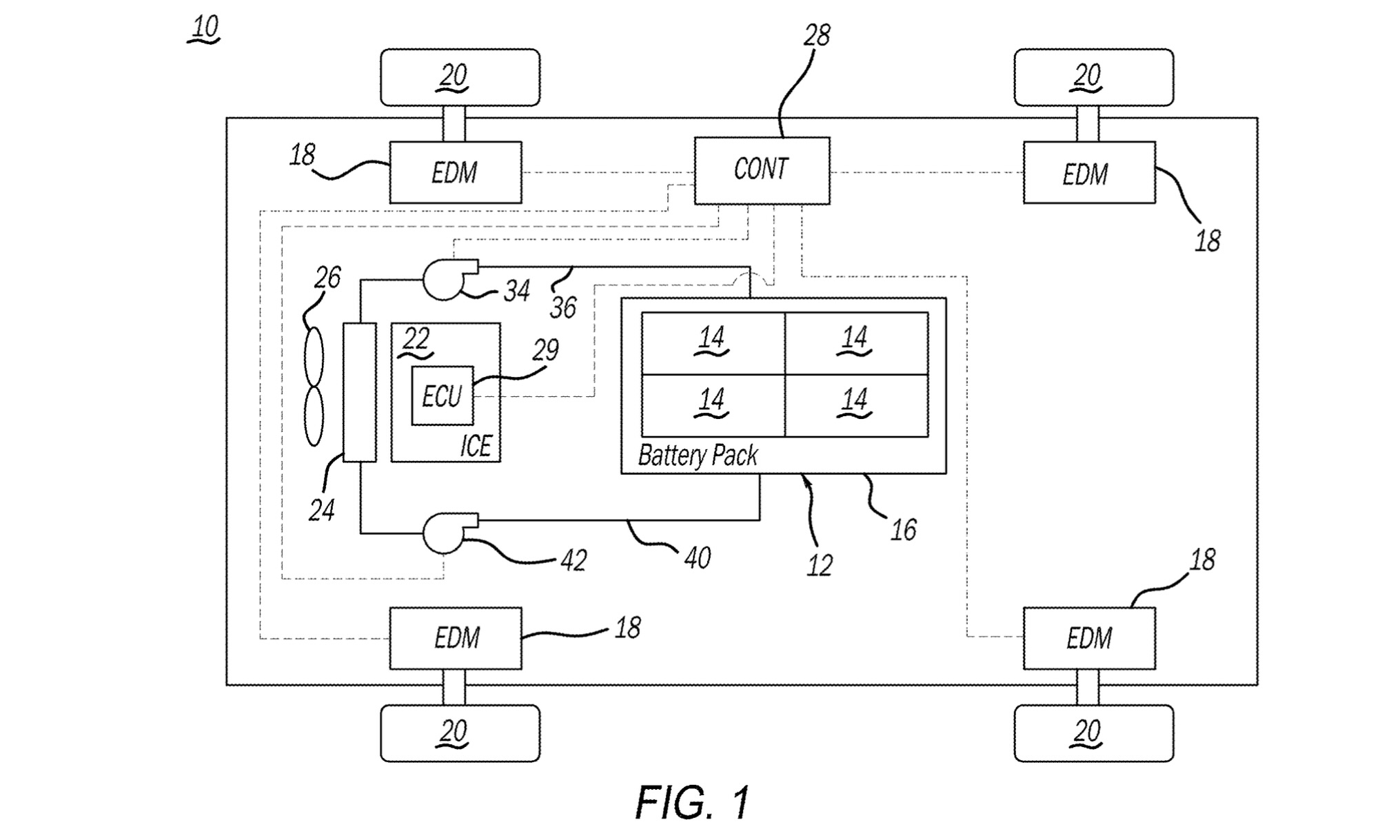
The patent describes a battery pack that still looks familiar on the outside: a rigid metal housing, rows of battery cells, a cooling system with coolant lines and heat sinks, and pressure vents. The extra technology is layered in around those components.
The key added pieces are:
-
A bladder filled with a fire-retardant chemical
This bladder is located close to the battery cells, typically between the cells and the top of the pack. It’s made from a flexible polymer, so it can be punctured when needed. -
Two sets of blades
– First blades: aimed at the bladder, ready to pierce it and release the fire-retardant chemical.
– Second blades: aimed at specific points on the coolant inlet line, outlet line, or heat sinks to rupture them and release coolant directly into the pack. -
Special coolant line sections
The cooling lines and/or heat sinks are built or modified with small sealed apertures—closed off with a soft plug material. These plugs are easy for the blades to pierce but strong enough to hold pressure in normal operation. -
Actuation devices tied to a controller
Electric or solenoid-style actuators push the blades into the bladder and coolant components when commanded by the vehicle’s controller.
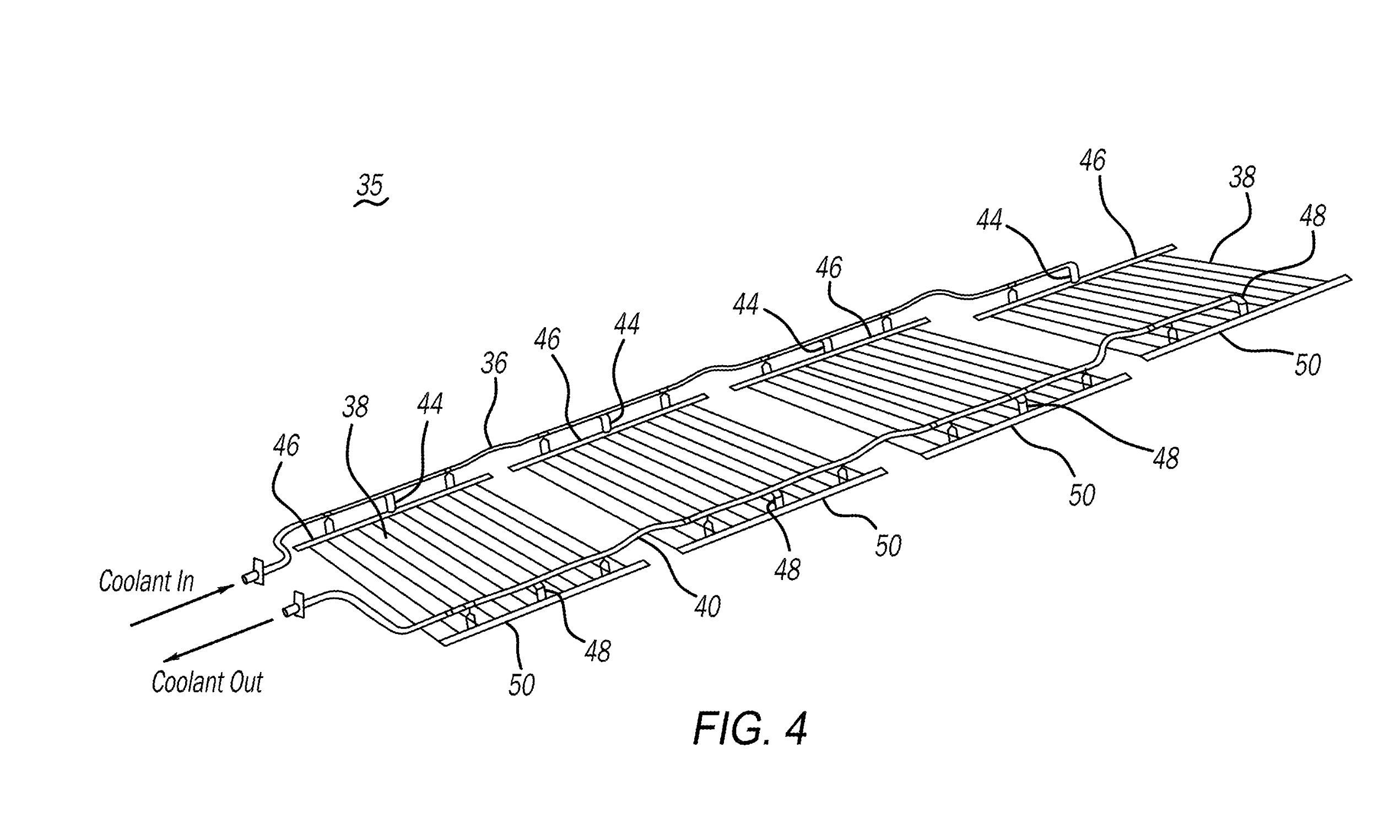
The system is integrated into the existing battery thermal management system, which already circulates coolant (typically a water/glycol mix) through heat sinks under or around the cells to manage normal operating temperatures.
How It Works In Real-World Terms –
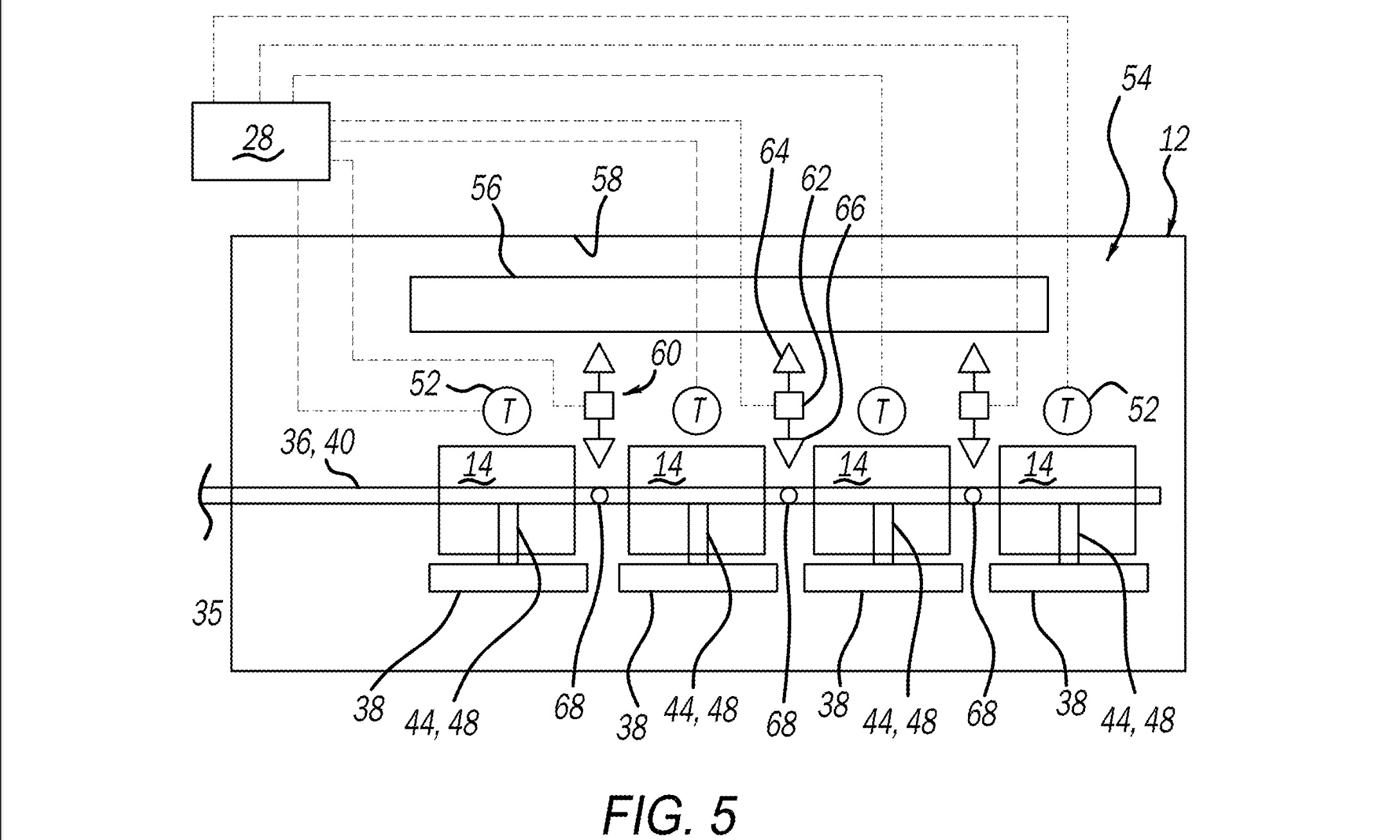
Think of this as an innovative fire-suppression system that lives inside the pack and only triggers when it senses serious trouble.
-
Continuous Monitoring
Temperature sensors inside the pack monitor battery temperatures. There can be one sensor per module, or even per cell, depending on the design. These send signals to a controller that constantly evaluates whether temperatures are within safe limits. -
Detecting Thermal Runaway Conditions
If the controller detects temperatures rising into a zone that indicates a thermal runaway event is occurring or about to occur, it switches from normal cooling to emergency mode. -
Triggering The Blades
The controller commands the actuators:-
The first blades puncture the fire-retardant bladder.
-
The second blades pierce the plug-filled apertures in the coolant line(s) or heat sink(s), opening them up.
-
-
Creating Fire-Retardant Foam
As the bladder empties, fire-retardant chemical spills into the battery compartment. At the same time, coolant escapes the opened ports under pump pressure. When the two fluids mix, they form a foam specifically formulated to:-
Absorb heat
-
Smother hot surfaces
-
Help prevent flammable gases from igniting
-
Extinguish any flames if they’ve already started
-
-
Boosting Coolant Flow
The controller can also tell the coolant pumps to speed up, forcing more coolant into the ruptured areas, increasing the volume of foam generated, and helping spread it more quickly throughout the cells. -
Managing Internal Pressure
The battery housing has vents with valves that can open if pressure builds up from gas generation during thermal runaway. The patent even suggests pulsing these valves—relieving pressure while keeping as much foam as possible inside the pack to continue suppressing the event.
Why This Matters For Future Mopar EVs And REEVs –
This isn’t just an engineering flex; it’s the kind of system that can directly affect customer confidence and real-world safety for upcoming Stellantis products.
Safer EVs For Everyday Owners
For someone buying a future Dodge Charger Daytona EV, a Jeep® Recon EV, a Chrysler crossover EV, a Ram pickup with a large battery pack, or a FIAT city car, the big question is simple: What happens if something goes wrong?
A system like this gives Stellantis a concrete answer: the vehicle is designed to fight its own battery fire from the insidebefore it becomes catastrophic.
Better Packaging And Potential Weight Optimization
If Stellantis can prove this system is effective, it may allow engineers to optimize how much passive fire protection is needed. That could, over time:
-
Reduce the amount of heavy shielding
-
Free up space inside the pack
-
Improve vehicle efficiency and potentially range
You’re not just making the pack safer—you’re also giving engineers another tool to balance safety, weight, and performance.
Strategic Move For Stellantis In The EV Space –
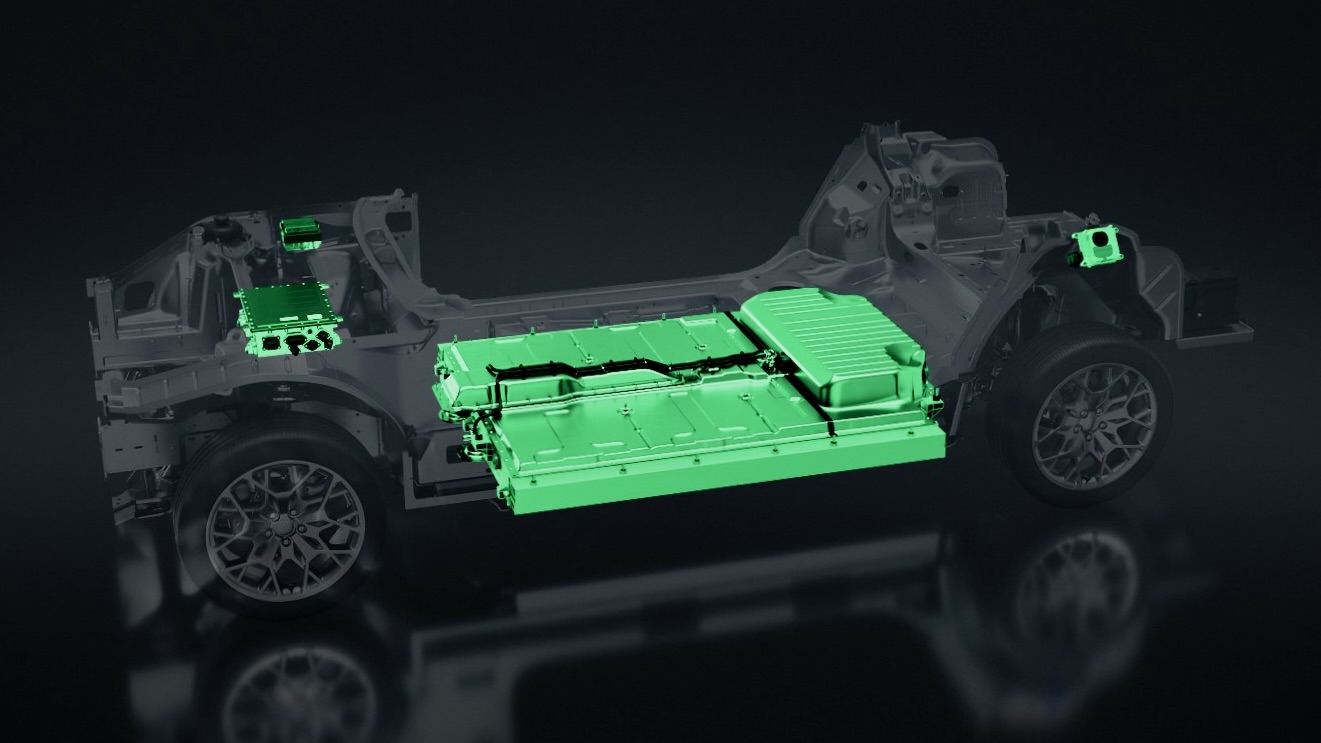
Patents don’t guarantee production, but this one checks a lot of boxes: it uses familiar components, integrates with existing cooling systems, and leverages proven fire-retardant chemistry. It feels less like a wild concept and more like a production-ready architecture that could roll out with upcoming platforms.
As Stellantis ramps up its electrified roadmap for North America, this battery thermal-runaway suppression system could become one of those “under the skin” features that helps set Mopar EVs and REEVs apart—especially in a marketplace where headlines about EV fires still grab attention.
If implemented, it would give future Chrysler, Dodge, Jeep®, FIAT, and Ram electric vehicles a serious technical talking point: not just fast, capable, or efficient—but smarter and safer when it matters most.